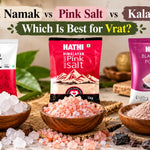










Sendha Namak vs Pink Salt vs Kala Namak: Which Is for Vrat?
 Sagar Dubal

07 October 2026
India generally uses 3 types of salt: sendha namak, pink salt, and kala namak. But not every household allows all of them in vrat meals.
Sendha namak is the salt most households use in their vrat dishes. Pink salt is another type of sendha namak, so many families allow it as well.
Whether you use kala namak depends on your family's traditions. Some families sprinkle it on fruit chaat and raita, while others avoid it entirely in vrat meals.
When you’re fasting, salt is one of the few things that still gives your food its taste. So choosing the right salt matters.
But every Indian household has its own vrat traditions and rules, and these rules change from region to region.
This quick guide explains and differentiates all the salts in simple words so that you can decide with your elders based on your traditions.
What You'll Learn From This Guide
-
This blog explains the real difference between all three salts.
-
Why many brands disagree that pink salt and sendha namak are the same.
-
Which salt is allowed in vrat meals, and how it varies from family to family.
-
Hidden table salt in spices or masala blends that many people don’t notice.
-
Sodium, minerals, and iodine content in all 3 salts.
What's the Difference? Sendha Namak vs Pink Salt vs Kala Namak
All 3 are salts. All 3 are mostly sodium chloride, which is what makes regular table salt taste extra salty.
They differ in where they come from, how they’re processed, and how they taste and smell.
|
Sendha Namak (Rock) |
Pink Salt |
Kala Namak |
|
|
Source |
Rock salt extracted from the earth |
Rock salt extracted from the earth |
Salt traditionally heated with charcoal and herbs |
|
Colour |
White, off-white or grey |
Light to deep pink |
Brown or purple; pinkish grey |
|
Taste |
Clean and gently salty |
Clean and mildly salty |
Salty and savory |
|
Smell |
None |
None |
Strong, boiled eggs like |
|
Processing |
Crushed and ground |
Crushed and ground |
Heated for many hours, then ground |
|
Main component |
Sodium chloride |
Sodium chloride |
Sodium chloride |
|
Iodine |
Generally doesn’t contain |
Usually not added |
Generally doesn’t contain |
|
Common usage |
Vrat or daily meals |
Vrat or daily meals |
Chaat, raita, buttermilk, chutney |
|
Vrat usage |
Mostly used in vrat meals |
Mostly accepted |
Depends on family’s traditionals |
What Is Sendha Namak?

Sendha namak is also known as rock salt. It is mined from salt beds that formed when seas dried up millions of years ago. Then it is crushed and ground into a fine or coarse powder.
Many names across India know it:
-
Hindi Name: सेंधा नमक (sendha namak)
-
Gujarati Name: સિંધવ (sindhav), or sindhav mithu
-
Marathi Name: saindhav
-
Sanskrit and Ayurveda Name: saindhava lavana
-
English Name: rock salt
What Is Pink Salt?

Many brands usually sell pink salt as Himalayan pink salt. This one is also rock salt mined from the earth.
It is pink in color because it contains tiny amounts of iron in the salt rock. More iron indicates a deeper pink color.
It is then finely ground and used the same way as sendha namak (rock salt).
What Is Kala Namak?

Kala namak (black salt) is also known as સંચળ (sanchal) in Gujarati and sanchal in many Hindi households too. It’s made completely differently from the other two salts.
This salt is heated in a furnace for many hours with charcoal and some plant materials like harad seeds.
This heat generates sulfur compounds inside the salt. Both iron and sulfur give this salt its dark colour. Another sulfur compound gives this salt that classic boiled-egg aroma.
In North India, much traditional kala namak is prepared around Hisar in Haryana. Nowadays, many brands begin with regular salt and then add the needed compounds before heating it.
Did You Know? Kala namak isn’t black once you grind it. The powder you use in your kitchen is pinkish grey.
Is Sendha Namak and Pink Salt Same?
Yes, generally. Pink salt is sendha namak. Both are rock salt mined from the earth. The only difference is the amount of iron, which gives rock salt its pink color.
So why do many websites give opposite answers? There are 3 main reasons:
- One name, many salts. In Indian markets, the name "sendha namak" is used for almost any rock salt, whether it is white or pink.
- Colour of the salt changes inside the same mine. Some rock layers contain more iron; some have less. You can mine white and pink pieces from the same salt bed.
- Many brands sell pink salt as something special. Because it is marketed as a premium salt, many people think it's better and completely different.
Verdict: Same salt family. Only the colour and tiny traces of minerals are different. For everyday cooking and vrat meals, you can treat them equally.
Is Sendha Namak Allowed In Vrat Meals?
Yes. Sendha namak is the most common preference for vrat meals in Indian families.
Many Indian households think regular table salt is factory-made. Sendha namak comes directly from the earth with minimal processing, so many people consider it pure enough for vrat meals.
This practice is passed down from generation to generation. There’s no written rule; everyone follows the same way.
You can use sendha namak in meals for these fasts:
-
Navratri
-
Ekadashi
-
Mahashivratri
-
Janmashtami
If you want a salt that mixes easily into sabudana or makhana dishes, fine sendha namak powder is the best option.
Is Pink Salt Allowed During Vrat?
Mostly, yes. Because pink salt comes in the form of rock salt, most Indian families use it in vrat meals.
Some religious people still prefer plain white sendha namak. This is normally just habit, because that is what every mothers used. Any of these is a good choice.
Is Kala Namak Allowed During Vrat?
The honest answer is: whether you can use this salt in vrat meals depends on your family’s traditions. No specific rule says you can't use kala namak on fasting days.
Some regions avoid it, and here is why they’re avoiding it:
- They heat the salt in a furnace with other herbs and materials, so some people consider it "cooked" or processed.
- Today, many brands make kala namak from regular salt, which these families already avoid in vrat meals.
Other households use this salt without hesitation, because they’ve always used it in fasting dishes.
If your family allows, you can use it in:
-
Fruit chaat
-
Vrat raita
-
Chaas
-
Green chutney
If you’re in doubt, ask your elders or go with sendha namak. Sendha namak is never the wrong choice in vrat meals.
Sendha Namak vs Pink Salt: Which Is Better for Vrat?
Either one works. Neither is healthier than the other. Pick based on three simple things:
- Taste: Almost the same. Most people cannot tell them apart in cooked food.
- Texture: Fine powder mixes better in dry dishes. Coarse crystals are better in a grinder.
-
Price: Pink salt usually costs a little more.
Sendha Namak vs Kala Namak for Vrat
These two salts behave very differently in the kitchen.
- Flavor notes: Sendha namak tastes clean and gentle. Kala namak is slightly tangy and savory.
- Base aroma: Sendha namak has no aroma. Kala namak has a strong, boiled-egg-like fragrance.
- Best usage for: Sendha namak is ideal for cooked dishes. Kala namak pairs better for raw or "finishing" uses like chaat and raita.
Is it possible to swap them?
- If you use kala namak in sabudana khichdi, the entire dish smells eggy and sharp.
- Sendha namak in fruit chaat or vegetable raita won’t make any difference and will taste flat.
Pink Salt vs Kala Namak
Pink salt behaves just like regular salt. Kala namak is used as a finishing salt that adds a strong, tangy taste at the end. You can’t swap them in the same dish. Use pink salt for cooked dishes, and kala namak to sprinkle raw, if your traditional vrat rules allow it.
Which Salt From These 3 is Best for Fasting Meals
Check out a quick guide to which of the 3 salt you should use in vrat dishes.
|
Name of the Dish |
Salt To Use |
Why to use |
Note to keep in mind |
|
Sabudana khichdi |
Sendha Namak/pink salt |
Fine powder coats all sago bead |
Add in sago beads before cooking |
|
Sabudana vada |
Sendha/pink salt |
Combines well with mashed mix |
Taste the mix before shape |
|
Vrat aloo |
Sendha/pink salt |
Mild; enhance jeera and ghee taste |
Add in the tadka |
|
Kuttu puri |
Sendha namak |
Blends properly into the dough |
Use the fine powdered salt |
|
Singhara puri |
Sendha namak |
Gives a gentle taste to puris |
Mix with flour before binding |
|
Samak rice |
Sendha/pink salt |
Dissolves well in water |
Combine with the water |
|
Vrat raita |
Sendha namak |
Gentle on plain curd |
Kala namak, if rules allow |
|
Fruit chaat |
Sendha namak & black pepper |
Makes it flavourful and keeps it vrat-safe |
Kala namak, if rules allow |
|
Makhana snacks |
Sendha/pink salt |
Fine powder-coat makhana |
Add and toss while warm |
|
Green chutney |
Sendha namak |
Gives clean flavour notes |
Add lime juice for tang |
|
Buttermilk |
Combines sendha namak with jeera |
Feels light, cold, and fresh in summer noons |
Kala namak, if rules allow |
Check Your Spice Mixes for Hidden Table Salt
This is one mistake many careful families still make. Ready-made chaat masala, jaljeera masala, and buttermilk masala often contain regular table salt along with kala namak.
Always read the label of any spice mix before you sprinkle it on your dishes.
If you want to make a regular vrat sprinkle at home, combine these ingredients:
-
2 tsp roasted jeera powder
-
1 tsp black pepper powder
-
1 tsp sendha namak
You can also add a little lime juice to the dish with this masala to add a little tang.
Sodium, Minerals and Iodine: What the Numbers Say
By Weight vs By Spoon
All 3 salts are mostly the same thing, ‘sodium chloride’. Pure sodium chloride is about 39% sodium. So spoon for spoon, all of these give you almost the same amount of sodium.
Then why do a few people think rock salt contains "less sodium"? The answer is the spoon.
- A level tsp of finely powdered salt weighs about 5-6 grams.
- Rough crystals don’t leave air gaps, so a spoon contains less salt.
So 1 spoon of rough pink crystals might give you a little less sodium than an equal spoon of finely powdered table salt. That is about the spoon, not the salt.
The WHO (World Health Organization) advises healthy adults to consume less than 5 grams of salt a day. This limit is for all 3 salts the same way.
Trace Minerals: Available, but In Very Small Amounts
Yes. Sendha namak and pink salt contain very tiny amounts of minerals like iron, calcium, potassium, and magnesium. But they’re too small to matter.
A 2020 study tested 31 pink salt samples. Researchers found that a person would need to eat more than 30 grams of pink salt a day, about 6 tsp, before those minerals add any real difference. This much salt can be more harmful than helpful.
Go with fruits, nuts, curd, and vegetables for minerals; they do a much better job.
Iodine: A Short Fast vs a Year-Round Switch
In India, normal table salt must contain added iodine by law. But FSSAI has clarified that traditional salts like rock salt, black salt, and pink salt don’t have to be iodized. Most packs don’t contain iodine.
- A few days of fasting: Not a thing to worry about for most healthy adults.
- Switching the entire kitchen for good: This is where the issue starts. Iodine is required to keep the thyroid healthy and supports children's growth.
A small habit can work best: Use iodized salt for everyday meals and use sendha namak for fasting days. Pregnant women should consult their doctor before switching the salt.
Health Note: If you have high BP, kidney trouble, or heart problems, don’t consider sendha namak a "low salt" option. It is still salt. Follow the limit your doctor suggested, even when fasting.
Common Misconceptions

"Pink salt doesn’t contain sodium."
Not actually. Pink salt is mostly sodium chloride, like regular table salt.
"Pink salt is healthier than others."
Not mostly. The extra minerals it contains are too small to make any difference.
"Sendha namak is actually different from table salt in nutrition."
No. Both these salts are mostly sodium chloride. The only real difference is that table salt contains iodine.
"Kala namak is allowed in every fast."
Not really. It varies from family to family. Many families use it, but many others avoid it. It depends on your home's custom.
"Kala namak is a type of sendha namak."
No. Kala namak can start as rock salt or regular salt, but heating it with charcoal and herbs changes its flavor notes, fragrance, and color.
The Bottom Line
The question “sendha namak vs pink salt” has one simple answer: Both salts come from the same family, so you can use either one in your vrat cooking.
Kala namak is totally different than these two, and whether it’s allowed in your fasting meals depends on your family traditions.
Whatever salt you choose, always check the label of masala packs before purchasing, and keep iodized salt for everyday meals.
Purchase pure sendha namak, pink salt, and kala namak from Hathi Masala's salts collection.
Frequently Asked Questions
Is sendha namak the same as pink salt?
Yes, mostly. Both sendha namak and pink salt are rock salt. Pink salt is pink in color becuase it has a slightly higher iron content. For everyday cooking and vrat, you can use both sendha namak and pink salt the same way.
Can we use pink salt in vrat?
Yes. Most Indian traditions allow pink salt in vrat meals because it is a form of rock salt. Some families prefer white sendha namak only out of habit.
Is kala namak allowed in Navratri fast?
It depends on your family’s traditions. Some Indian households used to sprinkle this on fruit chaat and raita during Navratri fasts. Others avoid it because it is heated in a furnace. Take advice from your elders.
Which salt is traditionally allowed to eat during vrat?
Sendha namak is traditionally allowed in vrat meals in most Indian homes. This is also known as rock salt or sindhav mithu. People use it for Navratri, Ekadashi, Mahashivratri, and Janmashtami fasts.
Does sendha namak contain less sodium than regular salt?
No. Both these salts are mostly sodium chloride. Rough crystals fill a spoon with less salt, which is why some people believe sendha namak contains less sodium.
Does sendha namak contain iodine?
Generally not. Many sendha namak packs don’t contain iodine. You can use it in vrat meals, but use iodized salt for daily meal prep.
Can I add chaat masala to my vrat meals?
Check the label first. Many market-available chaat masalas contain regular salt. If you follow strict vrat rules, instead of using store-bought chaat masala, prepare a simple mix of roasted cumin powder, black pepper powder, and sendha namak.
What is sendha namak known as in Gujarati?
Sendha namak is known as સિંધવ (sindhav) or sindhav mithu across Gujarat. Kala namak is known as સંચળ (sanchal).