









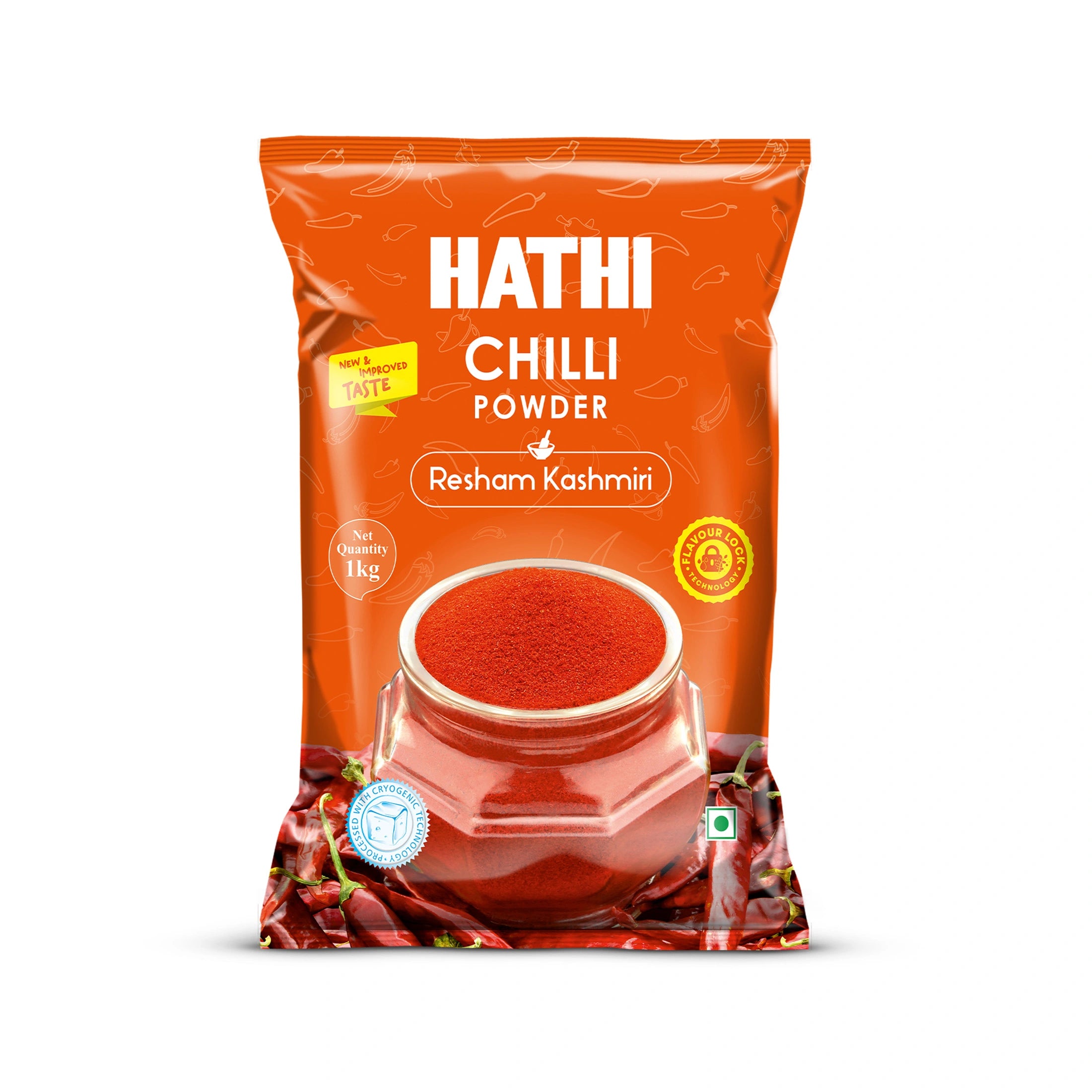


Dried Red Chilli Whole (Sabut Lal Mirch)


Wholesome
Goodness

Hygienically
Packed

Clinically
Proven

No Artificial
Colors

Notice Stronger
Aroma
Prefer It Over
Regular Pepper
Say It Elevates
Everyday Cooking
Description
Dried Red Chilli, The Bold Heat Behind Every Real Indian Tadka
Hathi Masala sourced whole, dried red teja chillies for rich colour and uniform heat. Each batch of teja dried lal mirch is lab-tested for aflatoxin content, safety, and purity. Machine-cleaned through a 9-step process; low-moisture processed to prevent mould growth. Unbroken stems and natural red colour are visible in the pack. Sourced from India's trusted chilli-growing regions. For tadka, chutneys, home grinding, and pickle masala.
About Hathi Masala Dried Chilli (Teja Lal Mirch)
Sourcing and Origin
Hathi Masala sources Teja chilli widely from the Guntur region in Andhra Pradesh. It’s the largest Teja S17 production region in India. The region's sandy soil, dry heat, and low-humidity harvest conditions give the chillies their thin skin, high oleoresin content, and that rich colour that releases the moment it hits hot oil.
Every batch is lab-tested for capsaicin content, oleoresin content, moisture, and aflatoxin before sourcing. Chillies with broken skins, uneven colour, or moisture are rejected before processing.
How Hathi Masala Processes Dried Red Chilli
Hathi Masala cleans all dried chillies using a 9-step automatic cleaning procedure. This procedure removes dust, broken chillies, fine stones, and other impurities. The entire process is handled without human contact at any stage.
After the cleaning procedure, the chillies go through low-moisture processing. The remaining moisture in stored dried chillies is the main reason for mould. Perfect drying at this stage preserves the capsaicin content and the natural colour, ensuring a good shelf life.
Hathi Masala used 3-layer packaging. These layers act as a complete barrier against moisture, sunlight, and air. These
How to Use Dried Red Chilli in Your Kitchen
For Tadka in Dal and Sabzi: Add 1-2 whole chillies to pre-heated oil at the beginning, along with other whole spices, such as mustard seeds and cumin. Let them cook for 8-10 seconds.
For Chutneys: Dry-roast some teja lal mirchies in a pan for 30-40 seconds, until you get a mild aroma. Let them cool before grinding. Roasting them first gives a deeper, rounder heat compared to using them raw.
For Home-Ground Chilli Powder: Dry-roast whole chillies until fragrant, let them cool completely, then grind them into a fine powder. Homemade chilli powder from fresh whole chillies has a stronger aroma and better colour than packed chilli powder.
For Pickle Masala (Achar): Add 6-8 whole dry chillies to raw mango, mixed vegetable, or lemon pickle. They add a bold, slow-building spice that balances the oil and salt in the base of achar.
Dried Red Chilli Variety Comparison
|
Variety |
Key Characteristic |
Heat |
Best Used For |
Grows In |
|
Guntur |
High capsaicin, deep red |
Very High |
Tadka and spicy curries |
Andhra Pradesh |
|
Teja S17 |
Thin skin, bright red, very high oleoresin |
Very High |
Home grinding, spice blends, chutneys |
Andhra Pradesh |
|
Mathania |
Thick skin, rich red, moderate heat |
Medium |
Rajasthani dishes, gravies, pickle masala |
Rajasthan |
|
Byadagi |
Very high colour, low heat |
Mild |
Colour-forward gravies, restaurant-style cooking |
Karnataka |
|
Kashmiri |
Brilliant red, light heat |
Very Mild |
Dishes that need a deep red colour |
Kashmir, HP |
Hathi Masala selects varieties based on capsaicin content and colour testing, not just on the region of origin.
Benefits of Dried Red Chilli in Your Daily Kitchen
Capsaicin is the main active compound in dried red chillies. It is responsible for the heat, spice, and colour transferred into hot oil. Dried red chillies are also a natural source of minerals, such as Vitamin C and Vitamin A. In traditional Ayurveda, red chilli is known as a warming spice that helps in digestion when used in appropriate amounts. Indian families have used it in moderate amounts in daily meals for ages.
These are the natural properties of sukhi lal mirch. They aren’t medical claims and don’t replace medical advice.
Storage: Store Dried Chillies in an airtight jar. Keep the jar in a cool spot, away from direct sunlight and moisture. Moisture reduces aroma and affects essential oil content. Best consumed within 18 months of the manufacturing date.
Quality You Can Trust
Hathi Masala has been part of Indian spice manufacturing since 1952. Our Dried Red Chilli is cleaned using a 9-step automatic cleaning machine that removes dust, stones, stems, and other fine impurities without human contact at any stage. Every batch of Hathi Masala spices is lab-tested for essential oils content, moisture, purity, and safety before dispatch.
- FSSAI-Certified and ISO 22000 Manufacturing.
- Lab tested every batch.
- Low moisture drying Technology
- Hygienically Packed. Dedicated sterilisation facility.
- Flavour-locked packaging
More from the Hathi Masala Kitchen
Explore related categories:
Salts - Black Salt, Rock Salt & Pink Salt for better taste and daily use
Blended Spices, Kitchen King, pav bhaji, chana masala & more
Pickle Masala, Ready-to-use masala mixes for homemade achars.
Recipes
History & Source
Ingredients
FAQ

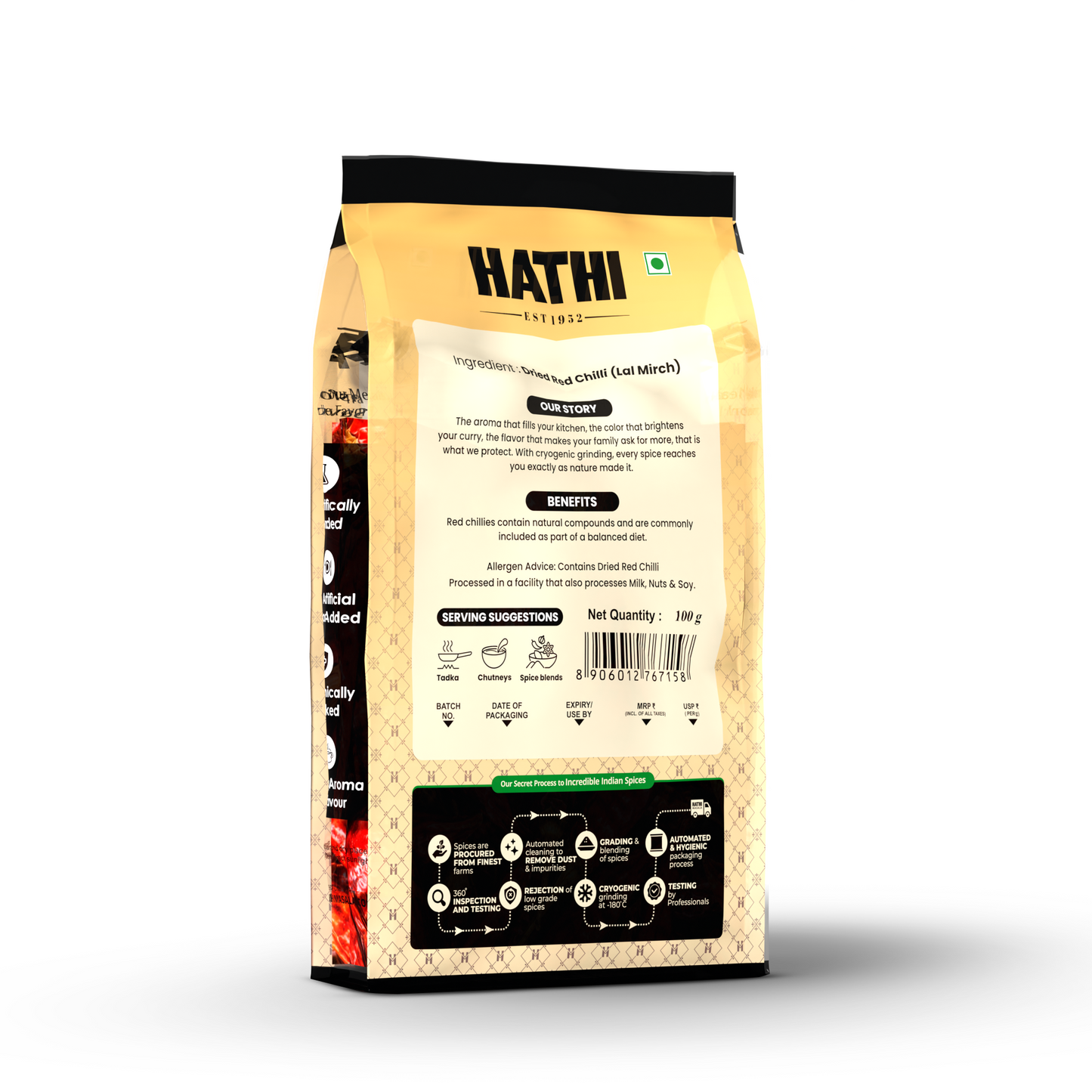
Spice up your kitchen


