











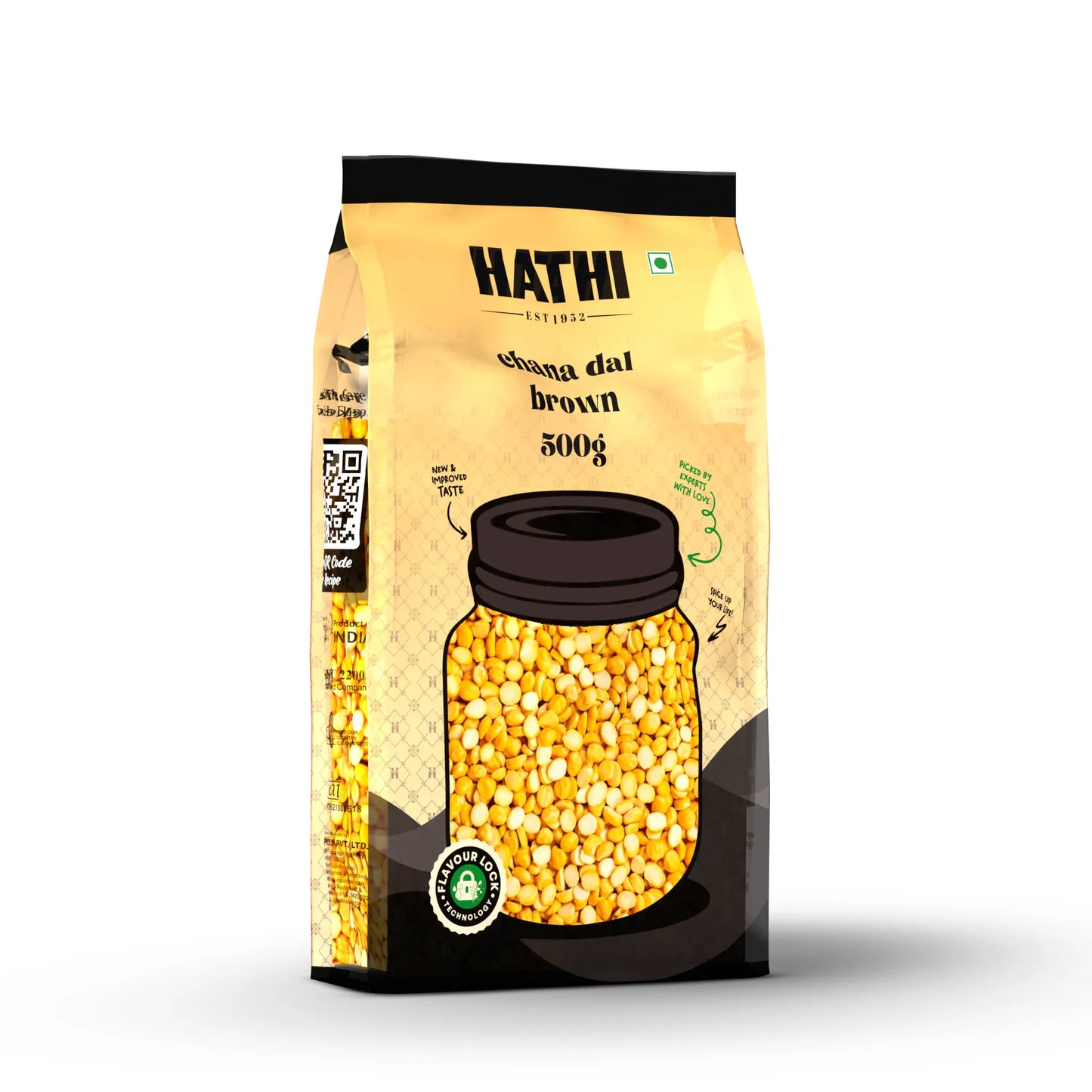
Chana Dal | Stone Free, High Protein Split Gram


Wholesome
Goodness

Hygienically
Packed

Clinically
Proven

No Artificial
Colors

Notice Stronger
Aroma
Prefer It Over
Regular Pepper
Say It Elevates
Everyday Cooking
Description
Buy Chana Dal Online, The Protein-Rich Pulse of Every Indian Household
Hathi Masala unpolished brown chana dal retains its natural fiber and nutrition. Every grain goes through a 9-step automatic cleaning machine, so there are no stones, dust, and very few broken pieces. It contains 20g of protein per 100g. You can use this to make rich, hearty dal for daily meals, chilla, and traditional sweets like puran poli and mohan thal.
Why Pick Hathi Masala Chana Dal Every Time?
- Hygienically Packed
- Fresh. Efficient. Pure
- Lab Tested Every Batch
- Flavour locked packaging
- Exported to 60+ Countries
About Hathi Masala Chana Dal
It is a split version of whole kala chana, in which the outer brown skin is removed. After this process, you get a golden-brown kernel that is firm, a little earthy, and full of flavour.
The unpolished variety retains its natural skin, unlike the fully polished yellow ones. The natural skin of grain provides a heartier taste, a firmer bite, and more fiber.
It is used in Indian households for daily cooking. In dal fry, chilla, sundal, vada, and sweets like puran poli and boondi ladoo, whole Split chickpeas are the base ingredient. It holds its shape during cooking, which makes it perfect for gravies and dry dishes.
Sourcing and Origin
Hathi Masala sources brown chana dal from the reliable farms of Rajasthan and Madhya Pradesh. These two are India's largest states for split chickpea production. The dry climate and black cotton soil in these states produce well-shaped grains with low moisture content and good cooking quality. Sourcing directly from farms means Hathi Masala can check quality before the grain even reaches our facility.
How Hathi Masala Process Chana Dal
Most chana dal available in the market contains tiny stones. These small stones are about the size of the dal grains. Finding a stone while eating is the issue every Indian family has experienced, and no one wants to.
At Hathi Masala, every batch undergoes a 9-step automatic cleaning procedure. It removes catch stones, broken grains, and any fine matter that traditional cleaning methods miss. You can cook with confidence without wasting time picking through the dal by hand before every use.
Hathi Masala Split chickpeas are also unpolished. No shine, no oil coating, no chemical treatment.
How to Use Chana Dal in Your Meals
- Dal fry: Pressure cook 1 cup of grains with 2.5 cups of water for 3-4 whistles. It stays firm and does not turn mushy completely. Finish the dal with a tadka of mustard and cumin seeds, dried red chilli, and hing.
- Chilla: Soak 1 cup of grains in normal water for 4-6 hours. Grind them into a thick batter, along with ginger, green chilli, and fresh coriander. Pour onto a hot tawa with some oil.
- Puran poli filling: Cook grains in a pressure cooker until soft. Strain the water and mash the dal with jaggery, cardamom powder, and a pinch of nutmeg powder.
- Sundal: Boil soaked grains until just cooked but still a little firm. Toss with mustard seeds, curry leaves, grated coconut, and salt. A simple, filling snack that takes under 15 minutes.
Benefits of Chana Dal in Your Daily Diet
It has been a part of Indian cuisine for ages. It is full of nutrients and easy on the stomach. It provides 20g of protein per 100g, which is among the highest for many dals. It is also rich in fiber, which keeps you full for a long time. It doesn’t cause a quick rise in blood sugar, because it digests slowly. That is why many families prefer chana dal over other dals for elders or diabetic members.
It also provides minerals, such as iron, folate, magnesium, and B vitamins. The unpolished variety retains more nutrients because the natural skin of the grain isn’t stripped away. It is gluten-free and perfectly suitable for vegetarian and vegan diets.
These are natural properties of the grain. They aren’t a medicine and don’t replace medical advice.
Storage: Keep Hathi Masala Brown split chickpeas in an airtight container. Store it in a cool, dry spot away from moisture and direct sunlight. Best used within 12 months of opening.
Quality You Can Trust
Hathi Masala has been in the spices, whole spices, and pulses market since 1952. Every batch of brown chana dal is sourced from reliable farms. They are unpolished and cleaned using automatic cleaning machines to remove stones and fine impurities. Every batch is lab-tested for moisture content, aflatoxin levels, purity, and safety before dispatch.
- FSSAI-Certified and ISO 22000 Manufacturing.
- Lab tested every batch.
- Low moisture drying Technology
- Hygienically Packed. Dedicated sterilisation facility.
- Flavour-locked packaging
More from the Hathi Masala Kitchen
Explore related categories:
Salts - Black Salt, Rock Salt & Pink Salt for better taste and daily use
Blended Spices, Kitchen King, pav bhaji, chana masala & more
Pickle Masala, Ready-to-use masala mixes for homemade achars.
Recipes
History & Source
Ingredients
FAQ
Spice up your kitchen


