











Selam Haldi Powder
Purchase Options


Wholesome
Goodness

Hygienically
Packed

Clinically
Proven

No Artificial
Colors

Notice Stronger
Aroma
Prefer It Over
Regular Pepper
Say It Elevates
Everyday Cooking
Description
Buy Selam Haldi Powder (Turmeric Powder) Online
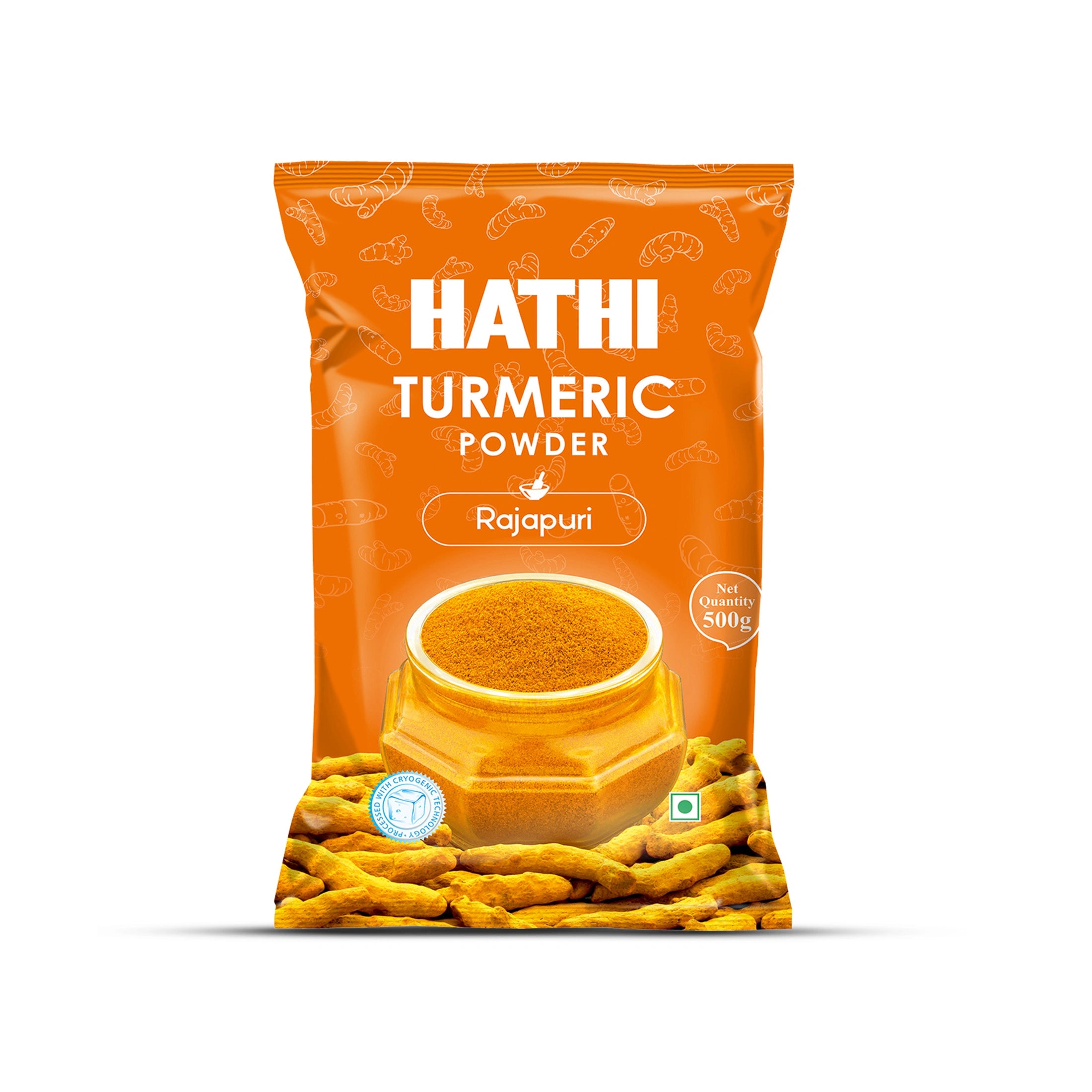
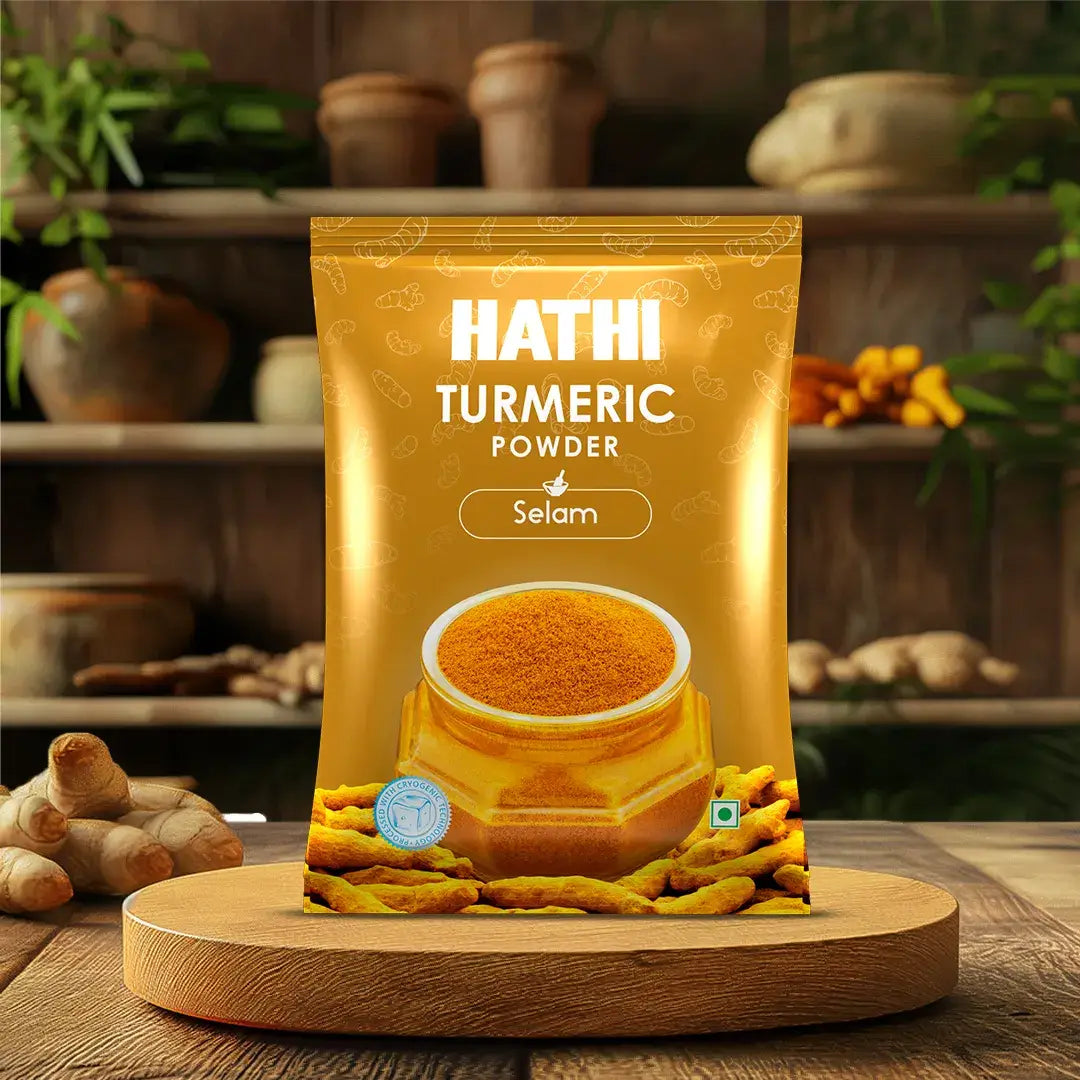
Hathi Selam Turmeric Powder is sourced from Salem in Tamil Nadu, one of India's most respected turmeric-growing regions. It is cryogenically ground at -150°C to preserve its natural curcumin and the deep golden colour that makes curries and biryani look exactly like they should. No artificial colour is added at any stage. This haldi powder is the right choice when your dish needs to look rich and taste fresh. Available in 500g, 1kg, 5kg, and 20kg.
Why is Hathi Masala Selam Haldi Different?
- Ground using cryogenic technology
- Lab Tested for 20+ Parameters
- Sourced from Salem, Tamil Nadu
- Hygienically packed
- No Artificial Additives or dyes
- FSSAI and ISO 22000 certified
What Is Selam Turmeric Powder (Haldi Powder)?
Selam Turmeric is ground haldi made from turmeric roots grown in the Salem region of Tamil Nadu. The active compound present in the haldi is curcumin, the same thing responsible for the golden yellow colour in your dal and curry, the aroma when you open the jar of haldi powder, and that earthy, warm flavour no other spice can provide.
Selam Haldi has a curcumin content of 3-5% and a colour value of 22-28 ASTA. This is noticeably stronger than the turmeric used for daily cooking. In practical terms, your sabji looks better, and your dal looks richer with less turmeric than you normally use.
Sourcing and Origin
Hathi Masala sources whole turmeric directly from trusted farms in the Salem region of Tamil Nadu. The soil and climate of these regions produce haldi with naturally high curcumin content and rich colour. Salem Haldi is well known across spice markets for its consistent colour profile and quality that holds in each harvest.
Selam Haldi’s colour profiles make it worth trusting. It gives a bright golden yellow-orange colour that remains the same even after being heated at high temperatures. This is why it’s popular in both commercial kitchens and households when the dish's appearance matters.
Every batch is evaluated for the curcumin content, colour profile, and dryness before acceptance. Turmeric that doesn’t meet the required standards is rejected before processing.
Why Cryogenic Grinding Matters for Selam Haldi Powder
The curcumin compound and volatile essential oils in haldi are responsible for the aroma and colour of haldi, and both of these are heat-sensitive. The traditional grinding process generates heat from friction, which evaporates essential oils and breaks down curcumin.
Hathi Masala is a cryogenic spice brand. This uses cryogenic technology to grind the dried whole turmeric by cooling it to -150°C using liquid nitrogen before grinding. At that temperature, the curcumin compound and essential oils crystallize and lock into each particle. The result is a haldi powder that smells earthy and deeper when you open the pack, and gives your meals a stronger, richer colour with less powder per dish.
How to Use Selam Haldi Powder in Your Daily Cooking
Biryani and Pulao: Use 0.5 teaspoon in the masala paste or the rice water. The higher colour profile of selam haldi gives a deep yellow-golden shade to the rice without making it bitter.
Curries and Gravies: Mix 0.5 teaspoon into the onion-tomato Masala paste while it cooks. The colour from Selam Haldi releases well into the hot oil, giving your gravy that rich, street-style look at home.
Haldi Doodh (Golden Milk): Stir 0.5 teaspoon of Selam haldi, a pinch of black pepper, and a spoon of honey in a glass of warm milk. The black pepper increases the curcumin absorption.
Haldi Ubtan (Skin Application): Mix Selam haldi along with besan flour and a few drops of rose water or fresh curd. Apply to your face, leave for 10-15 minutes, and rinse.
Nutritional Information
|
Nutrient |
Per 100g |
Per 1 tsp (5g) |
|
Energy |
354 kcal |
18 kcal |
|
Protein |
7.8g |
0.4g |
|
Total Fat |
9.9g |
0.5g |
|
Saturated Fat |
3.1g |
0.2g |
|
Trans Fat |
0g |
0g |
|
Carbohydrates |
64.9g |
3.2g |
|
Dietary Fibre |
21.1g |
1.1g |
|
Sugars |
3.2g |
0.2g |
|
Cholesterol |
0mg |
0mg |
|
Sodium |
38mg |
2mg |
|
Vitamin C |
25.9mg |
1.3mg |
|
Vitamin B6 |
1.8mg |
0.09mg |
|
Iron |
41.4mg |
2.1mg |
|
Potassium |
2080mg |
104mg |
|
Curcumin |
3-5% |
Naturally present |
Indicative nutritional value. The exact value may vary by batch.
Storage: Store Hathi Masala Selam Turmeric Powder in an airtight pack or container. Keep that in a cool, dry spot away from direct sunlight to keep the colour and aroma intact. Best consumed within 18 months of opening. Hathi Masala’s 3-layer sealed packaging protects curcumin until you open the pack.
Quality You Can Trust
Hathi Masala has been part of Indian spice manufacturing since 1952, made by Gandhi Spices Pvt. Ltd. in Rajkot, Gujarat. Our Super Turmeric powder is cryogenically ground at very low temperatures. It preserves its natural essential oils and the curcumin compounds (3-5%) that enhance its colour, aroma, and flavour. It processes without any human contact at any stage.
- FSSAI Certified and ISO 22000 Manufacturing
- Lab Tested Every Batch
- Cryogenic Ground at -150°C, No Heat Damage
- Hygienically Packed, Dedicated Sterilization Facility
- Flavour-Locked 3-Layer Packaging
Buy Hathi Masala Selam Turmeric Powder online. Available in 500g, 1kg, 5kg, and 20kg packs to suit your kitchen or bulk needs.
More from the Hathi Masala Kitchen
Explore related collections:
Everyday Masala, Turmeric, coriander, cumin & more for daily cooking
Turmeric Powder, Selam, Rajapuri, and Super Turmeric
Pickle Masala, Ready-to-use mixes for homemade achar
Whole Masala, Whole spices for tadka and traditional cooking
Recipes
History & Source
Ingredients
FAQ


Spice up your kitchen


