



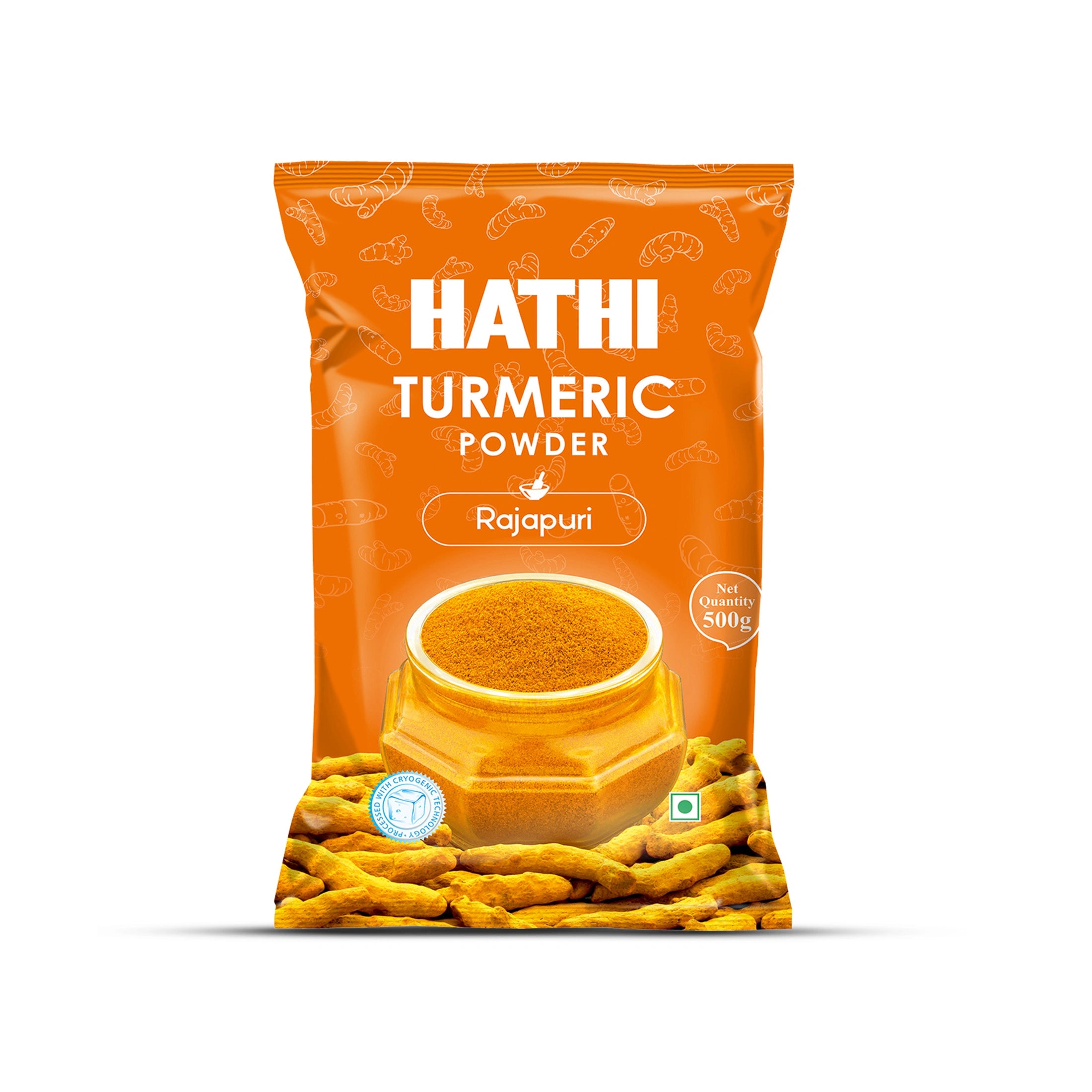








Rajapuri Turmeric Powder (Rajapuri Haldi Powder)


Wholesome
Goodness

Hygienically
Packed

Clinically
Proven

No Artificial
Colors

Notice Stronger
Aroma
Prefer It Over
Regular Pepper
Say It Elevates
Everyday Cooking
Description
Hathi Masala Rajapuri Turmeric Powder is sourced from the Rajapuri region in Maharashtra. The soil and climate in these regions produce turmeric that naturally contains high levels of curcumin. It’s cryogenically ground at -150°C to preserve 5-7% curcumin and the rich yellow colour that stays bold even after cooking. No artificial colour at any stage. This Haldi gives your dishes a deeper colour, a stronger aroma, and a good taste base. Available in 200g, 500g, 1kg, 5kg, and 20kg.
Why Trust Hathi Masala Rajapuri Turmeric?
- Ground using cryogenic technology
- Lab Tested for 20+ Parameters
- Sourced from Rajapuri, Maharashtra
- Hygienically packed
- No Artificial Additives or dyes
- FSSAI and ISO 22000 certified
What is Rajapuri Turmeric Powder?
Rajapuri Turmeric Powder is ground haldi made from the whole turmeric grown in the Rajapuri region in Maharashtra. Curcumin is the active compound in this haldi. It’s responsible for the rich golden-yellow colour in your everyday dishes, the natural aroma when you open the pack, and the warm flavour at the base of almost every Indian meal. Rajapuri Haldi contains 5-7% curcumin, noticeably higher than that of standard haldi powders used in most kitchens. That means your dishes look richer, and your golden milk tastes stronger, with less powder than you would normally use.
Sourcing and Origin
Hathi Masala sources whole turmeric roots directly from the trusted farmers across the Rajapuri region in Maharashtra. The warm climate and fertile black soil of this region give turmeric a consistently high curcumin content and a deep, warm golden-yellow colour. Rajapuri haldi is well known across spice markets for its health benefits and colour profile.
Rajapuri Haldi Powder sits at the top of our turmeric range, with 5-7% curcumin. Turmeric roots that don’t meet the required standards are rejected before processing.
Why Cryogenic Grinding Matters for Rajapuri Turmeric Powder
Curcumin compound and the natural essential oils in turmeric roots are heat-sensitive. The traditional grinding procedure produces heat due to friction. That heat evaporates the natural essential oils and breaks the curcumin compound.
Hathi Masala is a cryogenic spice brand. It uses cryogenic technology to grind the dried whole Rajapuri turmeric roots by cooling them to -150°C using liquid nitrogen before grinding. At that temperature, the curcumin compound and essential oils crystallize and lock into each particle. The result is a haldi powder that smells earthy and deeper when you open the pack, and gives your meals a stronger, richer colour with less powder per dish.
How to Use Rajapuri Turmeric Powder
Golden Milk (Haldi Doodh): Mix 0.5 teaspoon of haldi into warm milk with a pinch of black pepper and a little honey. Black pepper increases curcumin compound absorption.
Biryani and Pulao: Use 0.5 teaspoon in the rice water while boiling or the masala paste. Rajapuri gives your rice a warm, deep yellow colour that stays consistent without making the dish taste bitter.
Haldi Ceremony (Haldi Rasam): Rajapuri Haldi’s dark golden-yellow colour and high curcumin content make it a natural fit for the Indian wedding haldi ceremony. Mix it with raw coconut oil or water for a smooth application on skin.
Haldi Ubtan: Mix Rajapuri Haldi Powder with besan and add a few drops of rose water. Apply this paste on the face, leave on for 10-15 minutes, then rinse. The high curcumin content makes it a good choice for this.
Haldi Kadha (Immunity Drink): Add 0.5 teaspoon of Rajapuri to a glass of water along with a piece of ginger and 2-3 black peppercorns, and boil for 5 minutes. Strain and drink it warm. This remedy is used in cold weather to support immunity and ease throat discomfort.
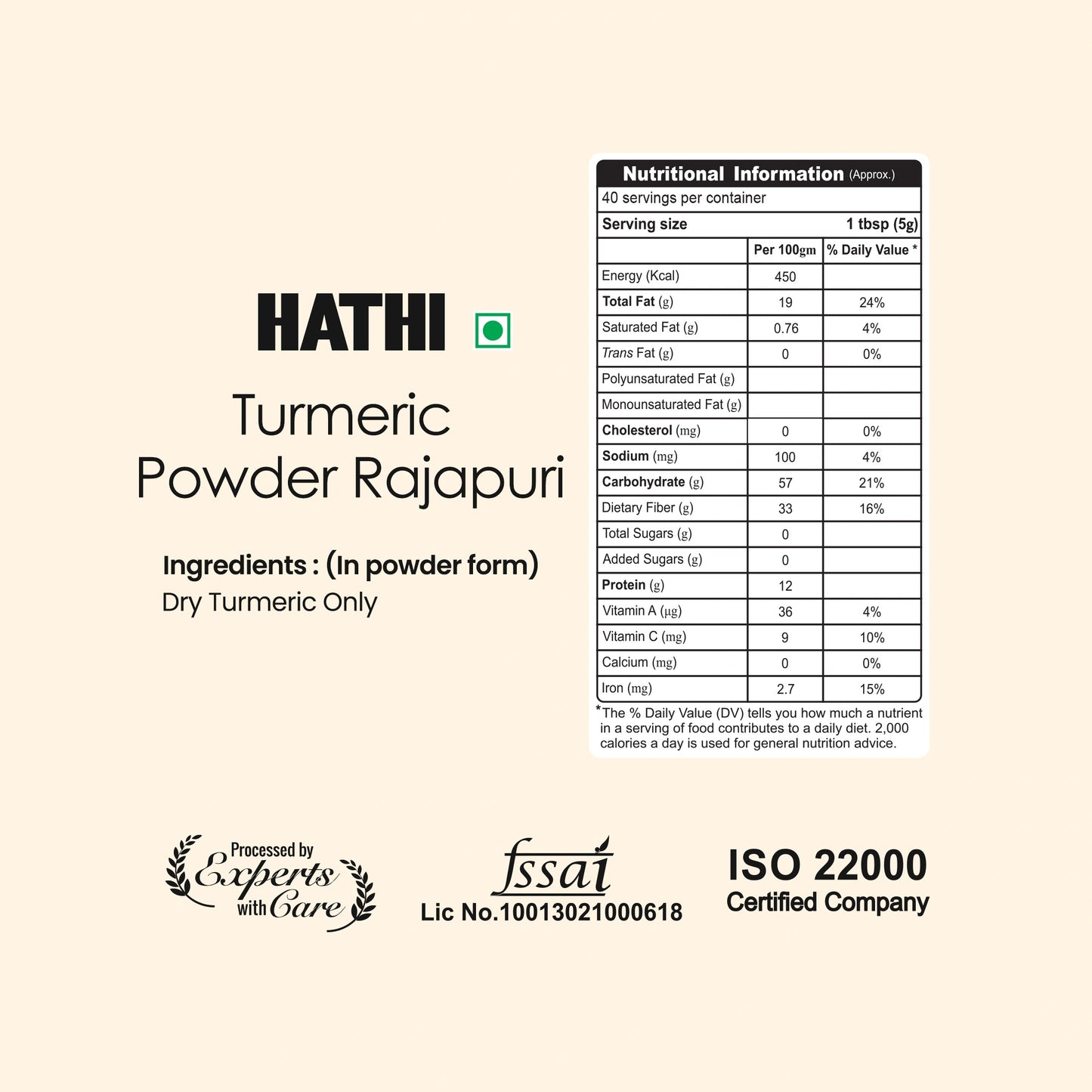
Nutritional Information
|
Nutrient |
Per 100gm |
% Daily Value* |
|
Energy (Kcal) |
450 |
|
|
Total Fat (g) |
19 |
24% |
|
Saturated Fat (g) |
0.76 |
4% |
|
Trans Fat (g) |
0 |
0% |
|
Polyunsaturated Fat (g) |
||
|
Monounsaturated Fat (g) |
||
|
Cholesterol (mg) |
0 |
0% |
|
Sodium (mg) |
100 |
4% |
|
Carbohydrate (g) |
57 |
21% |
|
Dietary Fiber (g) |
33 |
16% |
|
Total Sugars (g) |
0 |
|
|
Added Sugars (g) |
0 |
|
|
Protein (g) |
12 |
|
|
Vitamin A (µg) |
36 |
4% |
|
Vitamin C (mg) |
9 |
10% |
|
Calcium (mg) |
0 |
0% |
|
Iron (mg) |
2.7 |
15% |
Nutritional values are indicative. Exact values may vary by batch.
Comparison Table: Which Turmeric Should You Use?
|
Rajapuri Turmeric Powder |
Selam Turmeric Powder |
Super Turmeric |
|
|
Curcumin Content |
5-7% |
3-5% |
2.5-4% |
|
Origin |
Rajapuri, Maharashtra |
Salem, Tamil Nadu |
Standard varieties |
|
Colour |
Deep golden yellow |
Yellow-orange |
Standard yellow |
|
Best For |
Golden milk, special cooking, and health use |
Biryani, rich colour dishes, daily cooking |
Every day dal, sabji, budget cooking |
|
Price |
Premium |
Mid-range |
Budget |
Use Selam, if the colour of your dish matters. For the highest curcumin golden milk, wellness drinks, or haldi ceremonies, Rajapuri is the best choice. Go with Super Turmeric for everyday sabji and dal.
Quality You Can Trust
Hathi Masala has been part of Indian spice manufacturing since 1952. Our Rajapuri Turmeric powder is cryogenically ground at very low temperatures using liquid nitrogen. It preserves its natural essential oils and the curcumin compounds (5-7%) that enhance its colour, aroma, and flavour. It processes without any human contact at any stage.
- FSSAI Certified and ISO 22000 Manufacturing
- Lab Tested Every Batch
- Cryogenic Ground at -150°C, No Heat Damage
- Hygienically Packed, Dedicated Sterilization Facility
- Flavour-Locked 3-Layer Packaging
Buy Hathi Masala Rajapuri Turmeric Powder online. Available in 200g, 500g, 1kg, 5kg, and 20kg packs to suit your kitchen or bulk needs.
More from the Hathi Masala Kitchen
Explore related collections:
- Everyday Masala, Turmeric, coriander, cumin & more for daily cooking
- Turmeric Powder, Selam, Rajapuri, and Super Turmeric
- Pickle Masala, Ready-to-use mixes for homemade achar
- Whole Masala, Whole spices for tadka and traditional cooking
Recipes
History & Source
Ingredients
FAQ


Spice up your kitchen


I always ordered hathi company haldi masala and it's very good to others company product Nd also taste of hathi company masala is very pretty good.

Glow skin with this pack, feel soft. Also in cooking gud.
Easy to cook with this, mix well. Taste strong in dish. Good pack.
Bright haldi for food color. Make dal yummy. No complain.
Nice price for such quality, I buy regular. Fresh and bright.
Relief pain with haldi water daily. Powder fine and effective.
Food become tasty when add this haldi. Bright and pure. Recomnd.
Pure natural no mix things. Use for joint pain relief. Feel better.
Fresh in pack for long time, no moisture. Use in all recipe.
Nice aroma in cooking, make food smell gud. Use small amount.
High quality turmeric powder, happy with it. Color and taste top.
Make sabji color nice and bright. Taste improve lot. Family happy.
Grind is fine, no big piece in powder. Mix quick in curry. Strong flavor.
Strong color in milk and food. Smell fresh. Good for health.
Face pack make skin clear and soft. Also good in tea. Natural haldi.
Trust Hathi for all masala, this turmeric good. Use daily no issue.
Low price but gud quality, buy again. Fresh and pure. No mix.
Help in cough, drink hot with honey. Powder dissolve easy. No bad taste.
Bst for Gujarat food, I like much. Bright color and aroma. Buy again.
Use little for strong taste in food. Make cooking easy. Hathi best.
Smell fresh when open pack, last long. Use in sabji and dal. Gud quality.
Curry taste best with this turmeric. I add in all veg dish. Family praise.
Stay fresh in jar, no spoil fast. Use little for strong taste. Value money.
No chemical, natural haldi powder. Help in cough and cold. Drink hot.
Color stay in food, not fade quick. Smell nise and natural. Good for pickle.
Hathi masala always good, this haldi too. Strong and fresh. Use in Gujarat style food.
Use in all dish, no problem at all. Color and taste perfect. Hathi brand trust.
Price low but quality high, happy with buy. Last long in kitchen. Fresh always.
Yellow color is bright, make sabji look yummy. Add small amount for gud flavor.
Good for face, skin glow after pack. Also in food, taste nice. Pure haldi.
No coarse part, mix easy in water or milk. Use for health and cooking daily.
This is bst turmeric I use, food taste better now. Bright and pure. Buy from local shop.
No color added, its real Rajapuri. Use for health and cooking. Feel good after use.
Aroma is strong, make kitchen smell gud when cooking. Use in dal and rice. Happy with it.