











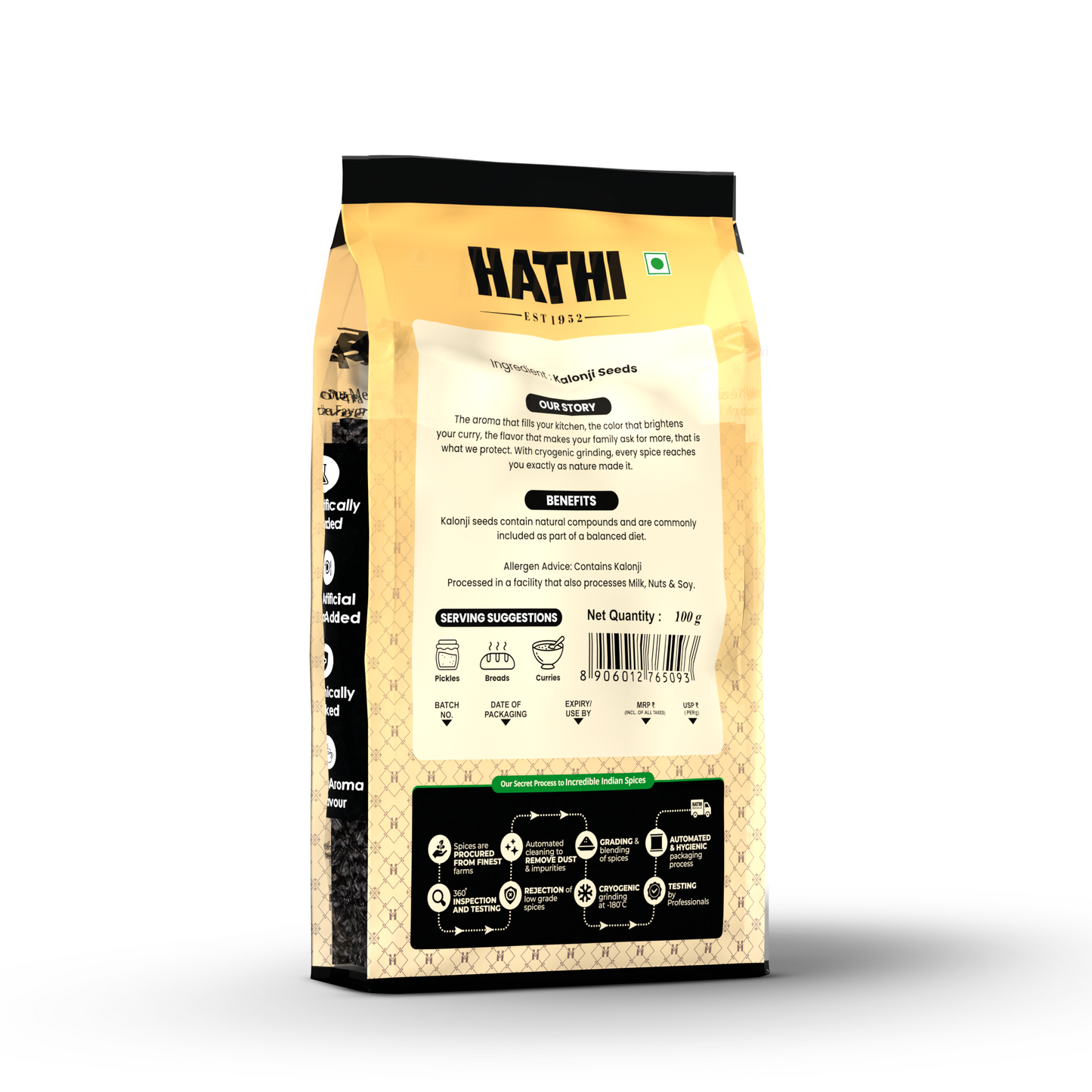
Kalonji Seeds (Nigella Sativa) | Lab Tested, Machine Cleaned


Wholesome
Goodness

Hygienically
Packed

Clinically
Proven

No Artificial
Colors

Notice Stronger
Aroma
Prefer It Over
Regular Pepper
Say It Elevates
Everyday Cooking
Description
Whole Kalonji Seeds, Strong and Pure for Every Indian Household
Hathi Masala source Pure Kalonji seeds (Nigella sativa seeds) from reliable farmers of Rajasthan and Madhya Pradesh. They are lab tested for thymoquinone levels. Fine-mesh machine-cleaned to remove dust and impurities from every seed. Seal packed in 3-layer packaging to lock in potency and aroma. Use whole seeds as a naan topping, in tadka, panch phoron, pickles, and daily well-being routines.
Why Do Indian Kitchens Trust Hathi Masala Since 1952?
- Hygienically Packed
- Fresh. Effiecient. Pure
- Lab Tested Every Batch
- Flavour locked packaging
- Exported to 60+ Countries
About Hathi Masala Kalonjee Seeds (Nigella sativa)
What are Kalonji Seeds (Nigella sativa)?
Kalonji seeds are black, teardrop-shaped seeds from the Ranunculaceae plant family. They’re commonly confused with black cumin or black sesame seeds, but are an entirely different spice with a distinct bitter, peppery, and slightly onion-like flavour. In Indian cooking, kalonji is used as a topping for naan and breads, as an important component of panch phoron, and as a whole-tempering spice in dals, pickles, and Bengali cuisine. The active compound in kalonji is thymoquinone, which gives it its aroma.
Sourcing and Origin
Hathi Masala sources kalonji from reliable farmers in Rajasthan and Madhya Pradesh. These two regions in India are the main producers of kalonji. The sandy soil and dry climate in these regions provide seeds with a stable, balanced thymoquinone content and lower field moisture. Both of these matter for potency and shelf life
How Hathi Masala Processes Kalonji Seeds
Kalonji seeds require a different, specialized cleaning procedure. Kalonji seeds are very tiny, so the regular, larger spice-cleaning machines left fine dust and debris. And that is why Hathi uses fine-mesh automatic cleaning systems designed specifically for small seeds. It removes dust, broken pieces, and other impurities without human contact.
After the cleaning procedure, the seeds are sealed in 3-layer packaging that protects their freshness and aroma from light and moisture. Each batch is lab tested for thymoquinone levels, moisture, and safety before leaving the facility.
How to Use Whole Kalonji Seeds in Your Kitchen
- On Naan and Breads, place 1 teaspoon of whole kalonji seeds on top before roasting. The seeds toast on contact with the heat and release their naturally bitter flavour.
- In Panch Phoron, Kalonji is one of the five seeds used in the Bengali spice combination, along with cumin, fennel, mustard, and fenugreek. Add all five in equal proportions for an authentic Bengali whole-spice combination.
- For Pickles, add whole seeds to raw mango, mixed vegetables, or lemon pickles. It acts as a natural preservative in achar and adds a slight bitterness that beautifully balances the salt and oil.
- As a Daily Wellness Drink, soak half a teaspoon of seeds in warm water overnight. Strain it and drink on an empty stomach the next morning. This is a common wellness habit used in Indian households for generations.
Kalonji vs Black Cumin vs Black Sesame, Know the Difference
|
Seeds |
Main flavour notes |
Widely used for |
|
Kalonji Seeds |
Bitter, peppery, slight onion |
panch phoron, naan, and pickles |
|
Black Cumin |
Smoky and earthy |
Kashmiri cooking, biryani, and salads |
|
Black Sesame |
Mild and nutty |
Indian sweets, garnish, tahini, and spreads |
These are all different types of seeds.
Benefits of Consuming Kalonji Seeds Daily
This is one of the most studied seeds in Ayurveda. Thymoquinone is the primary active compound. It has been the topic of research for its antioxidant properties. Kalonji seeds contain iron, calcium, and healthy fatty acids. In some traditional Indian households, a small daily intake of kalonji, typically half a teaspoon, has been a regular wellness practice. These seeds are naturally gluten-free.
These are natural properties of kalonji seeds. They aren’t a medicine and don’t replace medical advice.
Storage: Store these Seeds in a glass or plastic jar. Keep it in a dry spot away from moisture and direct sunlight. Best consumed within 18 months upon opening. The 3-layer sealed packaging saves thymoquinone potency until you open the pack.
Quality You Can Trust
Hathi Masala has been part of the spice manufacturing since 1952. Kalonji seeds are cleaned using fine-mesh automatic cleaning machines designed for small seeds. Each batch is lab-tested for the thymoquinone content, moisture, and safety before packaging.
- FSSAI-Certified and ISO 22000 Manufacturing.
= Lab tested every batch.
- Cryogenic Grinding Technology
- Hygienically Packed. Dedicated sterilization facility.
- Flavour locked packaging
More from the Hathi Masala Kitchen
Explore related categories:
Salts - Black Salt, Rock Salt & Pink Salt for enhanced taste and daily use
Blended Spices, Kitchen King, pav bhaji, chana masala & more
Pickle Masala, Ready-to-use masala mixes for homemade achar.
Recipes
History & Source
Ingredients
FAQ

Spice up your kitchen


