











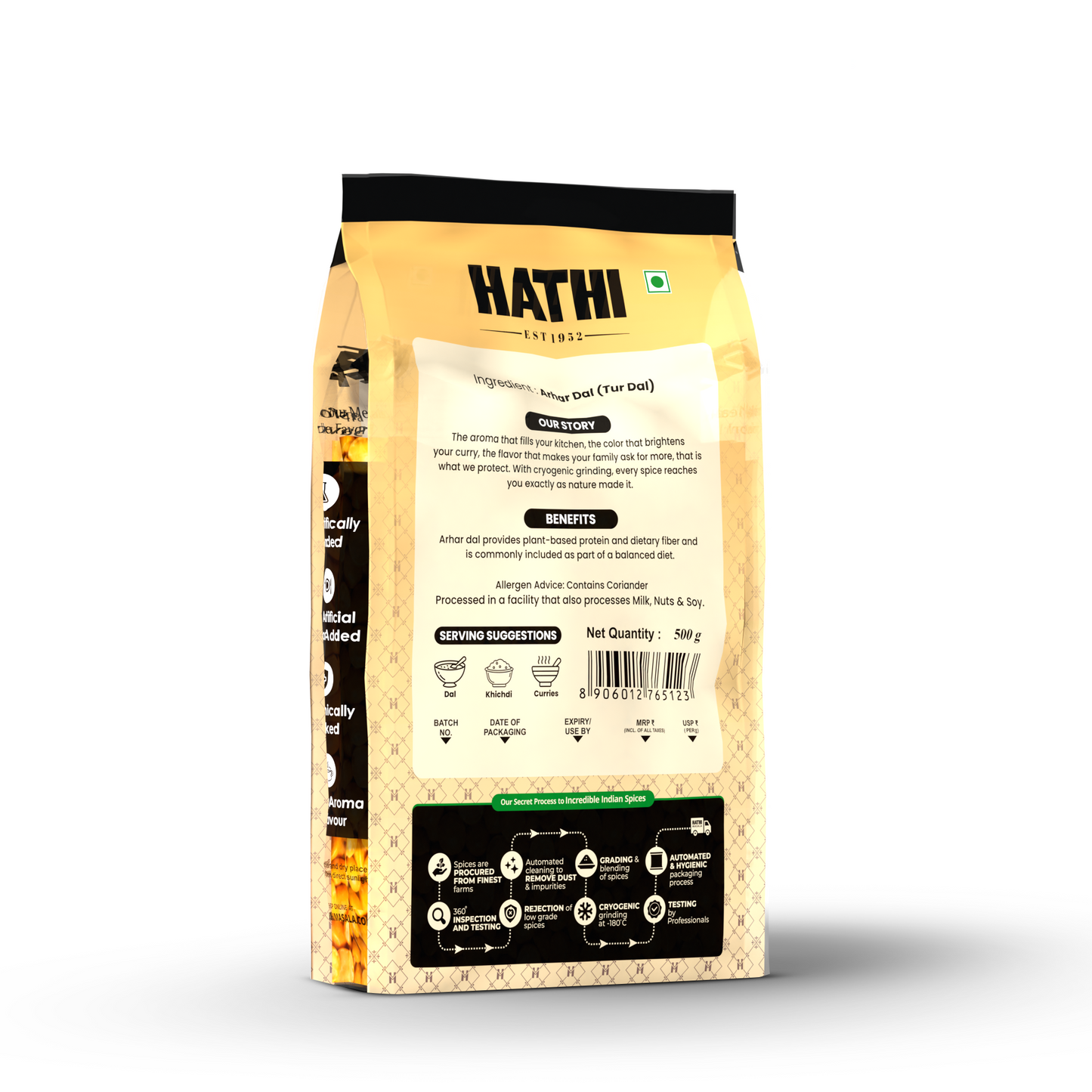
Arhar Dal (Toor Dal) | Unpolished, Stone Free, 22g Protein


Wholesome
Goodness

Hygienically
Packed

Clinically
Proven

No Artificial
Colors

Notice Stronger
Aroma
Prefer It Over
Regular Pepper
Say It Elevates
Everyday Cooking
Description
Arhar Dal, The Comfort Staple of Every Indian Household
Hathi Masala Arhar Dal is unpolished and sourced from current crop harvests, retaining its natural fiber and full nutritional profile. Sorted using a machine for zero stones, consistency of grain size, and minimal broken pieces. Each batch provides 22g of protein per 100g. Short cooking time due to the fresh ingredients. Perfect for dal fry, sambar, rasam, and everyday tadka dal.
What Sets Hathi Masala Spices, Whole Spices, and Pulses Apart?
- Hygienically Packed
- Fresh. Effiecient. Pure
- Lab Tested Every Batch
- Flavour locked packaging
- Exported to 60+ Countries
About Hathi Masala Arhar Dal (Toor dal)
Arhar dal is also known as toor dal or tur dal. It’s one of the most-consumed dals in Indian households as an everyday dish. It’s the main ingredient of Gujarati dal, sambar, dal fry, and panchmel dal. Hathi Arhar Dal is unpolished, which means no oil coating, and no artificial shine, just clean, stone-free dal that cooks evenly and tastes exactly the way it should. This preserves its fiber content and full nutritional density.
Sourcing and Origin
Hathi Masala sources toor dal straight from fresh-crop harvests in Maharashtra. This is one of the major states in India for tur dal production. We source only after the harvest period, not from stored old stock. It makes a huge difference. When tur dal is stored for many months, it dries out and becomes harder on the outside. That is why old stock takes time to cook, tastes grainy even after multiple whistles, and often turns mushy on the outside while remaining harder inside.
Fresh crop toor dal has different characteristics compared to old stocks. The grain remains fresher and softer, and it absorbs water quickly. You don’t need to wait long before cooking tur dal. 2-3 pressure-cooker whistles are enough to achieve a smooth, well-cooked dal. Less time on the stove, less gas, and better results in the dish.
Differences Between Unpolished and Polished Arhar Dal
|
Feature |
Unpolished Toor Dal |
Polished Toor Dal |
|
Appearance |
Matte, naturally yellow |
Oily and shiny surface |
|
Cooking time |
Lesser time (current crop) |
Longer time (older stock) |
|
Additives |
None |
Coated with oil or chemical preservatives |
|
Taste |
Fuller and earthier |
Milder and less complex |
|
Nutrient Retention |
Higher |
Lower |
Hathi Masala Toor Dal is unpolished and not oil-coated. What you get is the grain exactly as it was after cleaning and sorting. No surface treatment. No additives.
How Hathi Masala Processes Arhar Dal
Before packing, Hathi puts every batch through a 9-step automatic cleaning process. This procedure removes dust, stones, damaged grains, and foreign matter without any human contact. Fine-mesh sorting procedure secures consistent grain size for even cooking. Every batch goes through automatic grading, which removes broken and undersized grains, so what you get in the pack is consistent, clean dal.
Each batch is lab-tested for purity, safety, and moisture content before dispatch.
How to Use Arhar Dal in Your Kitchen
It is one of the most flexible lentils in Indian cooking. Here are some common preparations:
- To make traditional Dal Fry, soak 1 cup of tur dal for 20 minutes. Then pressure cook for 3 whistles. Then finish with a simple ghee, cumin, hing, and tomato tadka in a separate pan.
- For Sambar, cook tur dal with tamarind, tomatoes, and sambar powder, and temper with mustard and curry leaves in the oil of your choice.
- To prepare traditional Gujarati Dal, pressure-cook tur dal, add jaggery, lemon juice or tamarind, and tomatoes. Then finish with a mustard-and-curry-leaves tadka in oil or ghee.
- For Rasam, cook tur dal until lightly browned, extract the liquid, and combine with tomato, tamarind, and rasam powder. The dal liquid adds body and protein without making it heavy.
Benefits of Including Arhar Dal in Your Daily Diet
Arhar dal is a high-protein plant-based food that has been used in traditional Indian cuisine for ages. With a protein content of 22g per 100g, it’s one of the best sources of protein available in a vegetarian kitchen. The fiber present in unpolished toor dal supports maintaining good digestion. Naturally rich in folates, which matters especially during pregnancy. With a high iron content, it also makes a good dietary source for managing anemia. it’s also gluten-free and low in fat.
These are the grain's natural properties. They aren’t medical claims and don’t replace medical advice.
Storage: Store it in a glass or plastic airtight container. Keep it in a cool, dry spot away from moisture and direct sunlight. Best consumed within 12 months of opening. The 3-layer sealed pack of Hathi Masala keeps it fresh until it’s opened.
Quality You Can Trust
Hathi Masala has been in the spice and grain market since 1952. Arhar dal is cleaned using a 9-step automated procedure that removes stones, dust, and broken grains without human contact. Every batch is lab-tested for purity, safety, and moisture across 20+ parameters.
- FSSAI-Certified and ISO 22000 Manufacturing.
- Lab tested every batch.
- Cryogenic Grinding Technology
- Hygienically Packed. Dedicated sterilization facility.
- Flavour-locked packaging
More from the Hathi Masala Kitchen
Explore related categories:
Salts - Black Salt, Rock Salt & Pink Salt for better taste and daily use
Blended Spices, Kitchen King, pav bhaji, chana masala & more
Pickle Masala, Ready-to-use masala mixes for homemade achars.
Recipes
History & Source
Ingredients
FAQ

Spice up your kitchen


