











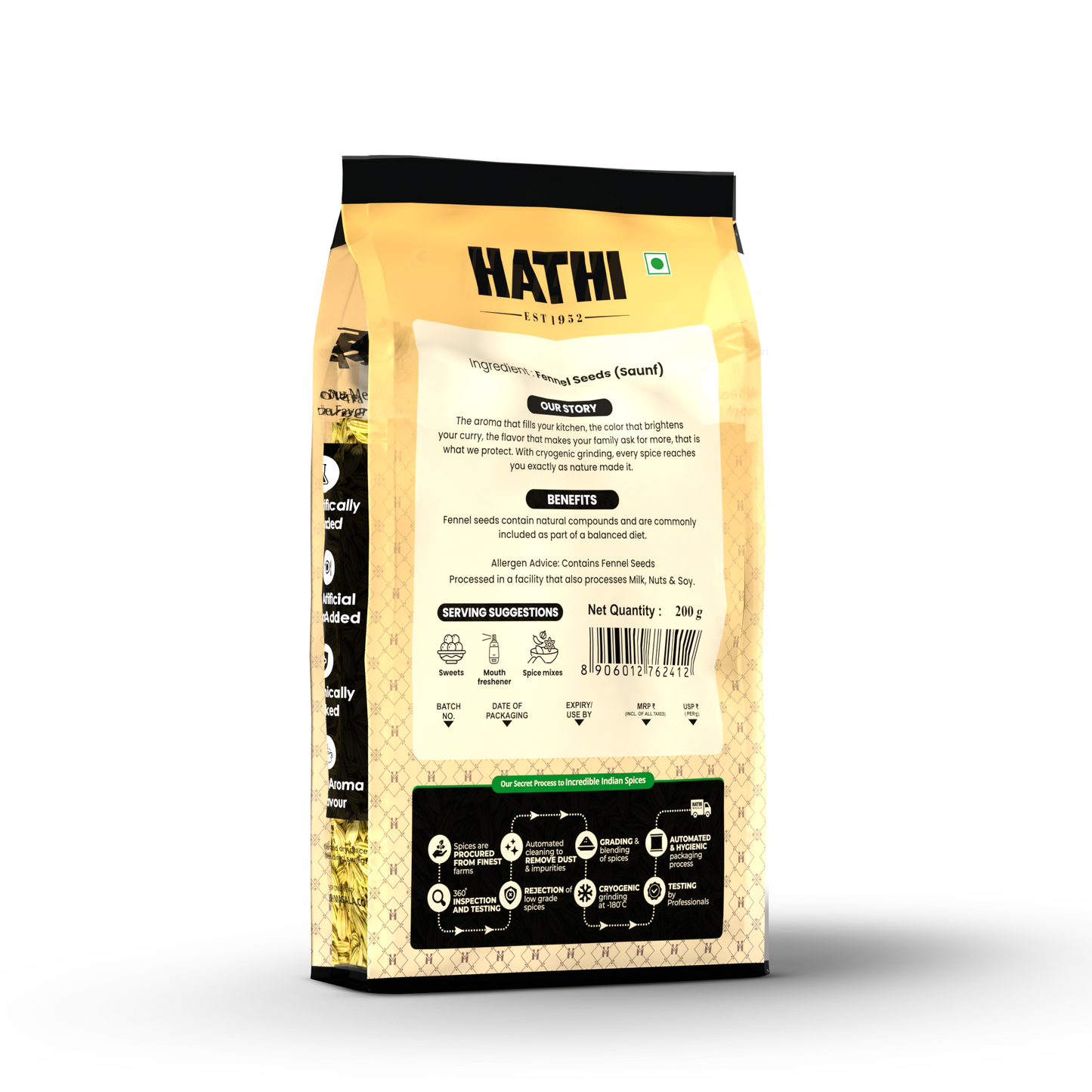
Fennel Seeds (Saunf) | Bold Green, High Anethole, Gujarat Origin


Wholesome
Goodness

Hygienically
Packed

Clinically
Proven

No Artificial
Colors

Notice Stronger
Aroma
Prefer It Over
Regular Pepper
Say It Elevates
Everyday Cooking
Description
Fennel Seeds, A Spice That Ends Every Indian Meal Right
Hathi Masala Fennel Seeds are bold green saunf sourced from Gujarat. The semi-dry climate produces saunf with naturally high anethole content. Anethole is the compound that gives fennel its characteristic sweet, cooling aroma and falvours. Every batch is machine-cleaned at Hathi Masala to remove stems and field impurities. It’s sealed in 3-layer packaging that locks in the aroma, which fades quickly in poor storage. For post-meal mouth freshening, saunf water, cooking, and digestive use.
The Quality Standards Hathi Masala Sets
- Hygienically Packed
- Fresh. Efficient. Pure.
- Lab Tested Every Batch
- Flavour locked packaging
- Exported to 60+ Countries
About Hathi Masala Whole Fennel Seeds (Saunf )
What are Fennel Seeds(Saunf )?
They are the dried seeds of the Foeniculum vulgare plant. It’s a tall, feathery herb from the carrot family that has been grown in India for many years. The seed is oval, pale to dark green, and carries a unique, sweet, anise-like aroma that is immediately recognizable.
In Indian homes, saunf sits in the mukhwas (mouth freshener) bowl after every meal. It’s added to panch phoron in Bengali cooking and used in dal, sabzi, pickle bases, and in Kashmiri cuisine as a primary flavouring.
The sweetness and cooling quality of saunf come from anethole. It’s the primary essential oil present in the seed. The greener and bolder the seed, the fresher it is and the higher its anethole content. Dull or pale seeds have either been stored too long or processed at high heat.
Sourcing and Origin
Gujarat is India's largest producer of fennel seeds. The Unjha region in Mehsana district is the largest fennel trading hub in Asia. The semi-dry climate, well-drained sandy soil, and cool winters create conditions that yield fennel seeds with naturally higher anethole levels and a darker green color than those from other regions.
Hathi Masala sources saunf from the main fennel-growing areas in Gujarat, where each batch is tested for size uniformity, anethole aroma intensity, and moisture levels. Light-colored, or high-stemmed saunf, aren’t selected during sourcing. Only uniform, bold green seeds with a clear, sweet aroma are accepted for processing..
Why the Colour Is a Quality Signal for Fennel
This is worth knowing before you buy fennel seeds anywhere.
The colour is the simplest quality test for fennel. Bold, deep-green seeds are harvested at the right stage, carefully dried, and processed quickly. Their anethole is intact. Open a pack of good fennel seeds, and the sweet, slightly licorice-like aroma should reach you immediately.
Pale yellow or greyish fennel seeds have been stored too long or processed aggressively. The anethole is a volatile oil that evaporates under these conditions. These may look like fennel, but taste and smell noticeably dull and flat.
Hathi Masala Fennel Seeds are selected for their bold green color and sealed in 3-layer packaging right after cleaning to lock in the aroma and essential oils. Every batch is lab tested for moisture and purity before dispatch.
How to Use Fennel Seeds in Your Kitchen
Fennel seeds are among the most versatile spices. They can be used raw, roasted, soaked, and cooked.
- As a Post-Meal Mouth Freshener (Mukhwas): Eat a pinch of raw saunf after meals. The anethole releases immediately and freshens the breath.
- For Saunf Water: Soak 1 teaspoon of saunf in a glass of water overnight. Strain and drink it in the morning. This is an old Indian habit for digestion and cooling the body in summer.
- For Bengali Panch Phoron: Saunf is one of the five seeds used in the panch phoron mix. Use equal parts of all these spices and mix them. Add the whole blend to hot oil before vegetables or fish.
- For Gujarati Dal and Sabzi: Add half a teaspoon of saunf to the hot oil with jeera and mustard seeds. Saunf adds a light sweetness to the overall flavour.
- For North Indian and Kashmiri Cooking: Saunf is ground and used as a primary flavouring in North Indian cuisine, especially in rogan josh. Ground saunf provides a sweeter, more aromatic base.
- For Pickles: Add whole saunf to mango, lemon, or mixed vegetable pickle bases. They add a light sweetness and act as a light preservative.
Benefits of Fennel Seeds in Your Daily Use
They have been part of Indian cooking and Ayurveda for ages. Anethole, the essential oil in fennel, is responsible for its sweet aroma. It's commonly known for its digestive properties. They are a natural source of fiber, vitamin C, calcium, iron, magnesium, and potassium.
In Ayurveda, saunf is considered a cooling spice. It has been used traditionally to boost digestion, freshen breath, and cool the body in summer heat. Hathi Masala Fannel Seeds are gluten-free and contain no artificial additives or preservatives.
These are the natural properties of spice. They aren’t medical claims and don’t replace medical advice.
Storage: Store saunf in an airtight jar. Keep the jar in a dry, cool spot away from direct sunlight. Anethole is a volatile essential oil that can evaporate if the seeds are exposed to heat or sunlight. Use within 12 months of opening.
Quality You Can Trust
Hathi Masala has been part of the Indian spice manufacturing market since 1952. Fennel seeds are selected based on bold green colour and anethole strength. They’re processed through a 9-step automatic cleaning procedure to remove stems, dust, and other impurities without human touch. Every batch of Hathi Masala spices is lab-tested for moisture, purity, and safety before dispatch.
- FSSAI-Certified and ISO 22000 Manufacturing.
- Lab tested every batch.
- Low moisture drying Technology
- Hygienically Packed. Dedicated sterilization facility.
- Flavour-locked packaging
More from the Hathi Masala Kitchen
Explore related categories:
Salts - Black Salt, Rock Salt & Pink Salt for better taste and daily use
Blended Spices, Kitchen King, pav bhaji, chana masala & more
Pickle Masala, Ready-to-use masala mixes for homemade achars.
Recipes
History & Source
Ingredients
FAQ

Spice up your kitchen


