











Sesame Seeds | Til / Tal


Wholesome
Goodness

Hygienically
Packed

Clinically
Proven

No Artificial
Colors

Notice Stronger
Aroma
Prefer It Over
Regular Pepper
Say It Elevates
Everyday Cooking
Description
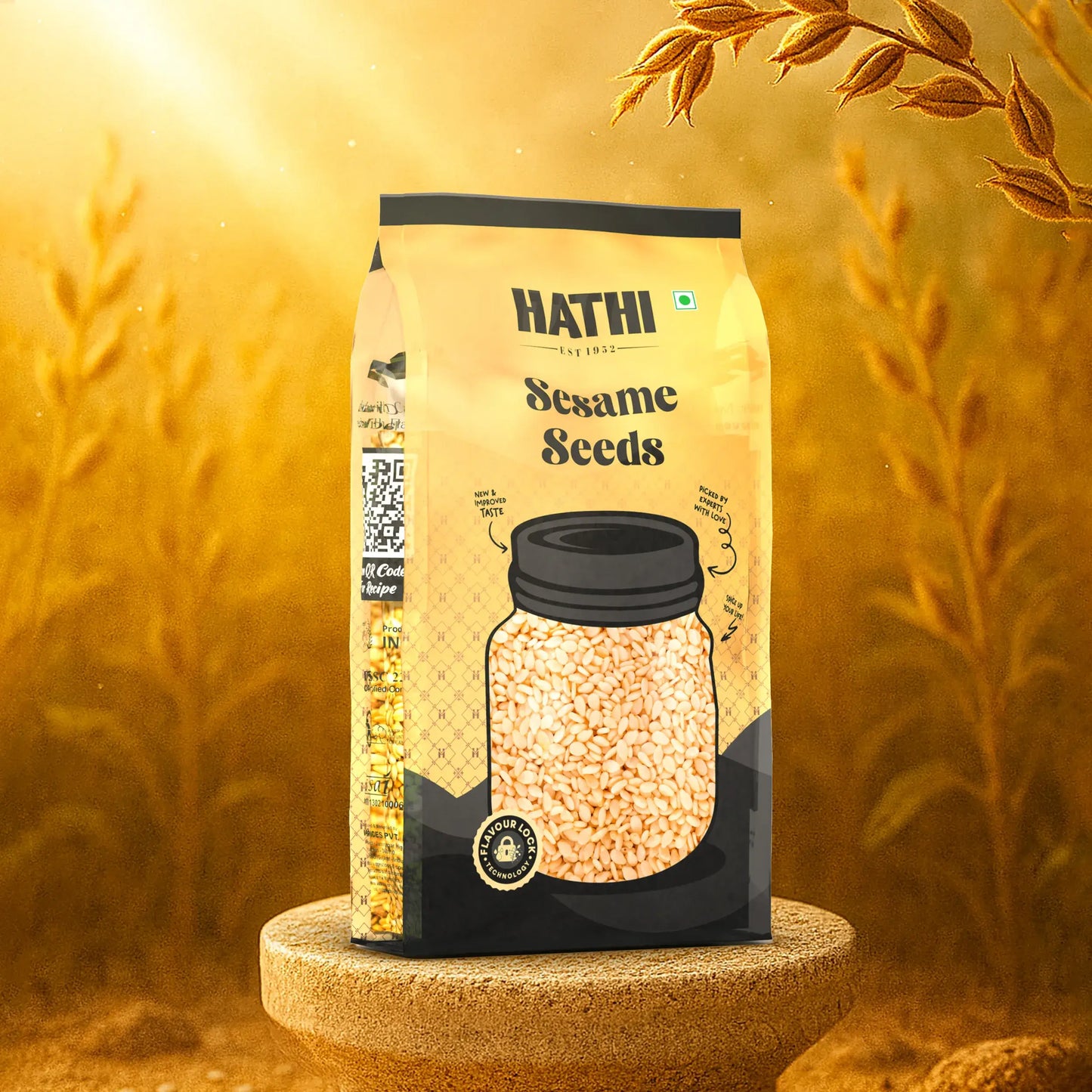
Hathi masala sesame seeds are widely known as til or tal in Gujarati households. They are clean seeds with a slightly nutty taste and a beautiful crunch. Each batch is machine-cleaned to remove fine impurities, such as stones, dust, and broken seeds. Hathi masala packed these seeds hygienically without human contact at any stage. These seeds have been used in Indian cuisine for ages, from Makar Sankranti laddoo and chikki to daily tadka. They’re naturally rich in calcium, iron, and healthy fats. Available in 100g, 200g, and 500g packs.
Why Choose Hathi Masala Sesame Seeds?
- Machine-Cleaned
- Rich in Calcium
- Lab tested for 20+ parameters
- Hygienically packed
- No artificial additives or dyes
- FSSAI and ISO 22000 certified
What is Sesame Seeds?
These seeds are also known as til in Hindi and tal in Gujarati. These tiny, flat seeds come from the sesamum indicum plant, one of the oldest oilseed plants. These seeds are cream to off-white, taste mildly nutty, and are slightly crunchy when eaten raw or toasted. When you dry-roast these seeds in a pan, they turn a little golden, and their natural oils release, giving off a warm, smoky fragrance. These seeds are a very rich plant-based source of calcium, iron, and magnesium. They are used equally at home in sweet dishes like laddoo and chikki, as well as in savory items like tadka, chutney, and vegetable toppings.
How Hathi Masala processes Sesame Seeds
These seeds are very tiny and contain stones, dust, and broken pieces of a similar size. These impurities can easily mix in during harvest and transport. Traditional cleaning machines built for usual larger spices can’t clean these tiny seeds properly. Hathi uses automatic fine-mesh cleaning machines designed specifically for tiny seeds. This machine removes fine impurities, such as stones, dust, and broken seeds, without any human contact at any stage. After the cleaning procedure, the seeds undergo grading to remove undersized or uneven seeds and pack only uniform, whole seeds. The seeds are then packed in 3-layer packaging to avoid moisture.
Nutritional Information
|
Nutrient |
Amount |
% Daily Value |
|
Calories |
573 kcal |
29% |
|
Total Fat |
49.7 g |
76% |
|
Saturated Fat |
7.0 g |
35% |
|
Carbohydrates |
23.5 g |
8% |
|
Dietary Fibre |
11.8 g |
47% |
|
Protein |
17.7 g |
35% |
|
Cholesterol |
0 g |
0% |
|
Calcium |
975 mg |
98% |
|
Iron |
14.6 mg |
81% |
|
Magnesium |
351 mg |
88% |
|
Potassium |
468 mg |
13% |
Nutritional values are indicative. Exact values may vary by batch.
Benefits of Hathi Sesame Seeds
Rich in calcium: It fulfils 98% of the daily calcium requirement per 100g. These seeds are among the richest plant-based sources of calcium available in any Indian home. It’s good for bone strength.
Good Iron source: At 81% daily iron needs per 100g. These seeds are naturally iron-rich. For families who don't eat fish and need plant-based sources of iron, adding these seeds to everyday meals is a perfect, natural way to boost iron intake.
High Magnesium: Provides 88% of the daily value per 100g. These seeds are one of the best plant-based sources of magnesium. It supports muscle function and energy.
Good Plant Protein: It gives 17.7g of protein per 100g. These seeds add a noticeable protein boost to any vegetarian meals. It works especially well in laddoos, chutneys, and dishes where they are used in larger amounts.
Zero Cholesterol, healthy fats: The fat present in these seeds is mostly unsaturated, which is considered good for heart health. There is no cholesterol at all.
Storage: Transfer these seeds to an airtight glass or steel jar after opening the pack. Store this container in a cool, dry place away from direct sunlight, moisture, and heat. These seeds contain natural oils; if stored improperly, they can turn stale. Always use a dry spoon. Use it within 6-12 months of opening to get better nutrients.
Quality You Can Trust
Hathi Masala has been a reliable choice of Indian households for over 70 years. We source high-quality sesame from its best growing farms across Gujarat. These seeds are then cleaned using automatic fine-mesh machines designed for tiny seeds, and packed hygienically in 3-layer packaging without human contact at any stage. Each batch is lab-tested for moisture, purity, and safety before dispatch.
- FSSAI-Certified and ISO 22000 Manufacturing.
- Lab tested every batch.
- Hygienically Packed.
- Dedicated sterilization facility.
- Flavour-locked packaging.
Buy hathi sesame seeds online. Available in a 100g, 200g, and 500g pack to suit your daily and bulk needs.
More from the Hathi Masala Kitchen
Explore related categories:
- Salts, Black Salt, Rock Salt & Pink Salt for better taste and daily use
- Blended Spices, Kitchen King, pav bhaji, chana masala & more
- Pickle Masala, Ready-to-use masala mixes for homemade achars
- Everyday Masala, Turmeric, coriander, cumin & more for daily cooking
Recipes
History & Source
Ingredients
FAQ
Spice up your kitchen


