









Ganthoda(Pipramu) Powder: Benefits, Side Effects and How to use
 Sagar Dubal

29 October 2026
Ganthoda is the dried root of the long pepper plant (Piper longum). It’s also known as pipramul in Gujarati and pipla mool (पिपला मूल) in Hindi.
If you grew up in a Gujarati household, you'll remember your mother making a huge batch of adadiya pak, katlu, or warm raab in winter. That amazing, earthy fragrance sometimes comes from ganthoda powder.
This traditional masala adds a strong, peppery taste to your dishes and is commonly used in winter foods. Indian Ayurveda has also used it for digestion and other traditional purposes for ages.
This guide explains what ganthoda is, how to use it in daily cooking, what research says about its medical and culinary benefits, and when to use it with caution.
Ganthoda at a Glance
|
Feature |
Details |
|
Botanical name |
Piper longum |
|
Part used |
Dried root |
|
Other names |
Pipramul, piplamool, pippali mool |
|
English name |
Long pepper root |
|
Taste |
Earthy, pungent, slightly bitter |
|
Traditional nature |
Warming |
|
Important compound |
Piperine |
|
Kitchen amount |
A pinch to ¼ tsp per family-sized dish |
|
Main cautions |
Acidity, pregnancy, breastfeeding, and medicine interactions |
What Is Ganthoda?
Ganthoda is a traditional Indian masala made from the dried roots of the long pepper plant.
This spice is especially popular across Gujarati households for winter foods and some Ayurvedic preparations.
Unlike cumin or haldi, most families don't add ganthoda to every meal. Most families use it in small quantities while preparing special dishes.
Which Plant Does Ganthoda Come From?
Ganthoda grows on the Piper longum plant. It’s a climbing plant in the Piperaceae family.
It needs warm, humid conditions to grow. So it grows in parts of eastern and northeastern India, including Assam and West Bengal.
The fact is that the same plant grows two different ingredients:
-
Ganthoda: a dried root.
-
Pippali (lindi pipar): The dried fruit.
Both come from the same plant, but their uses and traditional preparations differ.
What Does Ganthoda Look and Taste Like?
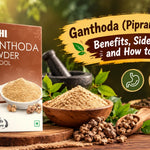
Whole ganthoda roots look like small, hard, brownish roots and turn into a light brown or beige powder after drying and grinding them.
It has an earthy fragrance with a strong, peppery taste. A tiny pinch is enough to change the taste of your entire dish.
Ganthoda in Hindi, Gujarati, English and Other Languages
Different Indian regions use different terms for ganthoda. This can confuse you while purchasing it from a local grocery store or online.
|
Language |
Name |
Script/note |
|
Gujarati |
Ganthoda, Pipramul |
ગંઠોડા, પીપરમૂળ |
|
Hindi |
Pipla mool, Pippali mool |
पिपला मूल, पिप्पली मूल |
|
English |
Long pepper root |
Indian long pepper root |
|
Sanskrit |
Pippalimula |
पिप्पलीमूल |
|
Marathi |
Pimpalimool |
पिंपळीमूळ |
Confirm regional spellings and names against authoritative botanical or Ayurvedic references before publication.
Is Pipramul the Same as Ganthoda?
Yes. Both pipramul and ganthoda are names for the same dried root.
You may also notice spellings like peepramul, piparamul, piplamool, and pipramool on different packets.
When buying this spice, always check the ingredient list for Piper longum root, because pippali fruit and ganthoda root aren't the same.
Ganthoda vs Pippali, Sonth and Black Pepper

Many people often get confused between ganthoda and sonth. Both are very popular warming winter spices, but they grow on completely different plants.
Here's a simple comparison.
|
Ingredient |
Plant |
Part used |
Imp. compound |
Common use |
|
Ganthoda |
Piper longum |
Root |
Piperine |
Katlu, raab, adadiya pak |
|
Pippali |
Piper longum |
Fruit |
Piperine |
Traditional recipes |
|
Sonth |
Zingiber officinale |
Dried rhizome |
Gingerols, shogaol |
Tea, laddoo, kadha |
|
Black pepper |
Piper nigrum |
Fruit |
Piperine |
Dal, curries, soups |
|
Tagar |
Valeriana species |
Underground parts |
Valerian compounds |
Traditional herbal uses |
|
Peepal tree |
Ficus religiosa |
Various parts |
Various compounds |
Different traditional uses |
Is Ganthoda Part of Trikatu?
No. Original Trikatu uses sonth (dry ginger), maricha (black pepper), and pippali (long pepper fruit).
You can combine ganthoda with dry ginger powder in many homemade recipes, but you can’t call that mixture Trikatu.
How Many Gujarati and Indian Households Use Ganthoda
Have you ever woken up on a winter morning to the smell of roasted flour, warm ghee, jaggery, and spices filling your entire house?
That's the familiar smell of many Gujarati winter recipes.
Ganthoda powder is a key ingredient traditionally used to add special flavors to these preparations.
1. Winter Cooking: Adadiya Pak, Sabji, Kadhi and Achar
Adadiya pak: A popular Gujarati winter sweet made with urad dal flour, ghee, jaggery, and dry fruits. A tiny pinch of ganthoda powder adds a warming, peppery flavor.
Ganthoda bataka sabji: Add a tiny pinch of ganthoda powder to potato sabji for an earthy note.
Gujarati kadhi: A pinch of ganthoda can give an amazing twist to the sweet-and-sour kadhi.
Homemade achar: Many traditional Indian pickle recipes contain ganthoda powder along with other spices.
2. Ganthoda Powder Raab and Winter Kadha
Raab is a warm, soothing Indian drink. Traditionally, it is made with wheat flour, ghee, jaggery, and water.
Many Indian households add sonth powder and ganthoda powder during winter.
Easy and Quick Ganthoda Raab Recipe
This raab recipe serves 2 people
Ingredients:
-
2 tbsp whole wheat flour
-
1 tbsp desi ghee
-
2 tsp jaggery powder or chopped jaggery
-
2 cups water
-
⅛ tsp good-quality ganthoda powder
-
A tiny pinch of sonth powder
-
A pinch of cardamom powder
Method:
-
Heat ghee in a pan and roast the wheat flour until lightly golden.
-
Gradually add water while stirring to prevent lumps.
-
Add jaggery powder or chopped jaggery and let it dissolve completely.
-
Add ganthoda, sonth, and cardamom powder
-
Simmer for 3–5 minutes and serve warm.
The entire batch contains around ⅛ tsp of ganthoda.
3. Katlu (Batrisu) and Postpartum Sweets
Katlu powder is a traditional Gujarati sweet made using simple ingredients such as ghee, jaggery, edible gond, and warming masalas.
Many Indian households prepare a big batch of katlu pak for winter and after childbirth.
Many traditional katlu mixtures also contain ganthoda powder. For more convenience, katlu powder is a ready-made spice blend containing pipramul and several other herbs and spices.
Pregnant or breastfeeding women should always consult their doctor before consuming these kinds of herbal mixtures in their daily diet.
4. Parsi Vasanu
Vasanu is a traditional Parsi preparation for cold winter days. It contains ghee, nuts, and a few warming spices.
Many family recipes use ganthoda for its earthy flavor.
5. Ganthoda Powder With Warm Milk
Many Gujarati households add a pinch of ganthoda powder to warm milk, especially in winter mornings.
You can also add cardamom powder for a better, slightly sweeter taste, but no strong human studies show that ganthoda milk helps with sleep or cures body pains.
Ganthoda Benefits: What Tradition Says and What Research Proves

Indian Ayurveda has been using ganthoda for ages. But traditional use and scientific proof aren’t always the same thing.
Here's how you can understand the evidence:
|
Proof |
Meaning |
|
Traditional use |
It is used for ages, but not scientifically proven |
|
Animal or laboratory research |
Studied in animals, not confirmed in human beings |
|
Human study |
Tested in the human body, but study quality may vary |
1. Digestion and Bloating
In traditional Ayurveda, pipramul is associated with better digestion and may help relieve stomach discomfort.
That is why people sometimes add ganthoda powder to rich winter foods.
Limited human research is available, so we can't confirm that ganthoda root helps with indigestion, constipation, or bloating.
2. Cough, Cold and Winter Warmth
Many families traditionally use ganthoda in winter kadha, raab, and other warm drinks, as it has a strong, warming nature.
These warm drinks may help with a sore throat and feel comforting in cold weather.
However, no studies have proven that ganthoda can cure coughs, colds, or viral infections in humans.
3. Body Aches and Joint Discomfort
An animal study reviewed the pain-relieving effects of Piper longum root.
Many scientists noticed significant effects in animals after giving 400–800 mg/kg of root powder. This wasn’t a human trial.
It doesn’t prove that ganthoda helps with arthritis or joint pain in humans.
4. Piperine and Absorption
Ganthoda contains an active compound known as piperine. It’s also found in black pepper kernels.
Many studies have evaluated piperine for its ability to change how the body absorbs certain substances, including medicines.
But high absorption isn’t always better. It can also increase the risk of medication side effects.
5. Popular Myths or Claims That Need More Proofs
|
Popular claim for Ganthoda |
What study shows |
|
Helps with weight loss |
There’s no proper human proof for ganthoda root |
|
Reduces cholesterol level |
Can’t be used as a medical treatment |
|
Helps with heart disease |
No available trusted medical evidence |
|
Cures anaemia |
Can’t be considered a substitute for iron treatment |
|
Rich in magnesium |
High nutritional benefit from small amounts isn’t proven scientifically |
|
Helps with better sleep |
No strong scientifically proven proof is available |
The takeaway: You can use ganthoda powder in traditional cooking, but treating it as a medicine for these conditions isn’t advisable.
How to Use Ganthoda Powder (and How Much Is Safe)
Ganthoda powder has a strong taste, so always start with a little amount.
In Everyday Cooking
|
Preparation |
Amount to use at start |
|
Sabji for the entire family |
¼ tsp |
|
Kadhi or dal |
A pinch |
|
Rab for 2-3 people |
⅛ tsp |
|
Huge batch of adadiya |
½-1 tsp |
|
Any winter laddoo |
¼-½ tsp per batch |
Consider these only as suggested cooking quantities. These aren’t medically known as safe doses.
Remember, 1 tsp in a batch of 20 laddoos is very different from 1 tsp eaten by one person.
Traditional Homemade Recipes
Many families add a tiny pinch of ganthoda powder to warm milk, raab, or other warm homemade drinks with dry ginger powder and jaggery.
Some Indian households also combine ganthoda powder with tulsi and dry ginger for winter kadha or drink it warm with honey; it is a traditional home remedy for cold.
However, these are food traditions, not proven treatments. Never give honey mixtures to babies under one year.
How Much Ganthoda Can You Take in a Day?
No scientifically proven safe daily dose of ganthoda root powder exists for everyone.
Traditional Indian Ayurveda may suggest different medicinal quantities. These amounts highly depend on the preparation and purpose.
In everyday dishes, you can add a tiny amount as your recipe mentions. For daily medicinal use, consult a qualified Ayurvedic doctor rather than relying on online dosage guides.
Best Time to Use Ganthoda
Generally, people across Gujarat and India consume ganthoda in winter mornings in raab or in warm evening milk.
However, no evidence shows that consuming this spice at a specific time of day is better.
Don’t use concentrated quantities without professional advice.
Side Effects of Ganthoda Powder and Who Should Avoid It
Even natural masala can cause issues when consumed in large quantities.
1. Acidity and Heartburn
Ganthoda powder has a sharp taste that may irritate the stomach.
It can sometimes cause acidity, heartburn, a burning sensation, and stomach discomfort.
Ayurveda experts may also caution people with high Pitta.
Stop using ganthoda powder in any form if it causes irritation.
2. Pregnancy and Breastfeeding
Many Indian families traditionally use ganthoda powder in many postpartum foods, but there are no proven concentrated herbal preparations that are safe during pregnancy or breastfeeding.
Don’t use medicinal amounts during pregnancy without your doctor’s approval. Breastfeeding women also need medical advice before using concentrated herbal mixes.
3. Interactions With Medicines
Many researchers have studied interactions between piperine and medicines. They have found that measured piperine content can easily increase blood levels of many medicines.
But the effect of normal cooking quantities of ganthoda hasn’t been mentioned.
If you and your family are on prescription medicines, consult your doctor before consuming ganthoda in concentrated amounts.
4. Kids and Infants
Small amounts in everyday meals differ greatly from using ganthoda powder as a home remedy.
Consult a pediatrician before adding this spice to your kids’ herbal preparations.
5. Diabetes Medicines
Research on long pepper preparations has explored possible blood-sugar effects, but evidence for ganthoda root in people with diabetes remains limited.
If you take diabetes medicines, seek medical advice before using it regularly.
Consult your physician before using ganthoda powder medicinally if you:
-
Are pregnant or breastfeeding.
-
Take regular prescription medicines.
-
Have diabetes or recurring acidity.
-
Want to give it to a child.
-
Plan to use concentrated quantities daily.
How to Choose and Store Ganthoda Powder
Choosing good-quality ganthoda is simple if you know what to look for.
Whole Roots vs Powder
Whole ganthoda roots are useful if you prefer to grind your spices yourself.
Ganthoda powder is more convenient than the root because you can add a pinch of your preference directly to your dish.
What Are the Signs of Good Quality Powder
Look for a clear ingredient list that mentions Piper longum root, FSSAI license details, a batch number, packing information, and an intact seal.
The powder should have a natural earthy aroma and no unusual moisture, mould, or grit.
If you prefer ready-to-use powder, try hathi masala ganthoda powder (pipramul), made for traditional preparations and home cooking.
Tips for Storage
Always transfer the powder into a dry, clean, airtight container. Keep the container away from moisture, direct sunlight, and heat.
Always use a dry spoon, and finish the spice before the best-before date on the pack.
Frequently Asked Questions
What Is Ganthoda Powder Called in English?
Ganthoda powder is generally known as Indian long pepper root powder. It is dried and ground root of the Piper longum plant and has a warm, slightly spicy taste. Many traditional Indian recipes and home remedies use this spice.
What Is Ganthoda Powder Called in Hindi?
Ganthoda powder is mostly called piplamool or pippali mool (पिप्पली मूल). This name refers to the root of the long pepper plant and is used in many traditional Indian dishes and Ayurveda.
Is Pipramul the Same as Ganthoda or Pippali?
Yes, pipramul and ganthoda mostly refer to the same plant's root. However, pippali is the dried fruit of the same plant.
Both come from the same plant, but they’re different parts, so you shouldn’t confuse them.
What Are the Main Differences Between Ganthoda and Sonth?
Ganthoda powder is made from the root of the long pepper plant, while sonth is dried ginger powder.
Both spices have a warm, spicy taste and are commonly used in traditional Indian recipes, especially in winter.
How Much Ganthoda Powder Should I Consume Daily?
No scientifically established daily dose exists for ganthoda powder. If you use it in your everyday meals, start with a tiny pinch.
If you want to use it as a home remedy, consult a healthcare professional.
Can I Drink Ganthoda Powder With Milk at Night?
Yes, some Indian families traditionally add a small pinch of ganthoda powder to warm milk. However, reliable research is limited, so it can't be confirmed that it helps with sleep or body pain.
Can Pregnant or Breastfeeding Women Take Ganthoda?
Pregnant and breastfeeding women should consult their doctor before using ganthoda as a home remedy or in large amounts. There is not enough reliable information about its safety during pregnancy and breastfeeding.
Should I Add Ganthoda Powder to Men and Kids' Meals?
Adults can use small amounts of ganthoda in everyday cooking. For children, avoid giving concentrated ganthoda powder or home remedies without medical advice. Do not give herbal preparations to infants unless a healthcare professional recommends them.
Does Ganthoda Help With Weight Loss?
There is no strong scientific evidence that ganthoda directly helps with weight loss. A balanced diet and regular physical activity are better ways to manage weight.
Does Ganthoda Powder Actively Help With Weight Loss?
Ganthoda may affect how some medicines work in the body. If you take regular medication, speak to your doctor before using ganthoda in large amounts or as a home remedy.
The Bottom Line
Ganthoda powder is a traditional spice that adds an earthy, peppery flavor to Gujarati winter foods.
From firm adadiya pak to warm liquidy raab, a tiny pinch of this masala powder gives your regular dish a noticeable twist.
You can use it in cooking, but first check its limitations, and don’t use it as a medicine without any professional advice.
For regional, good-quality masala powder, explore Hathi Masala Ganthoda Powder.