









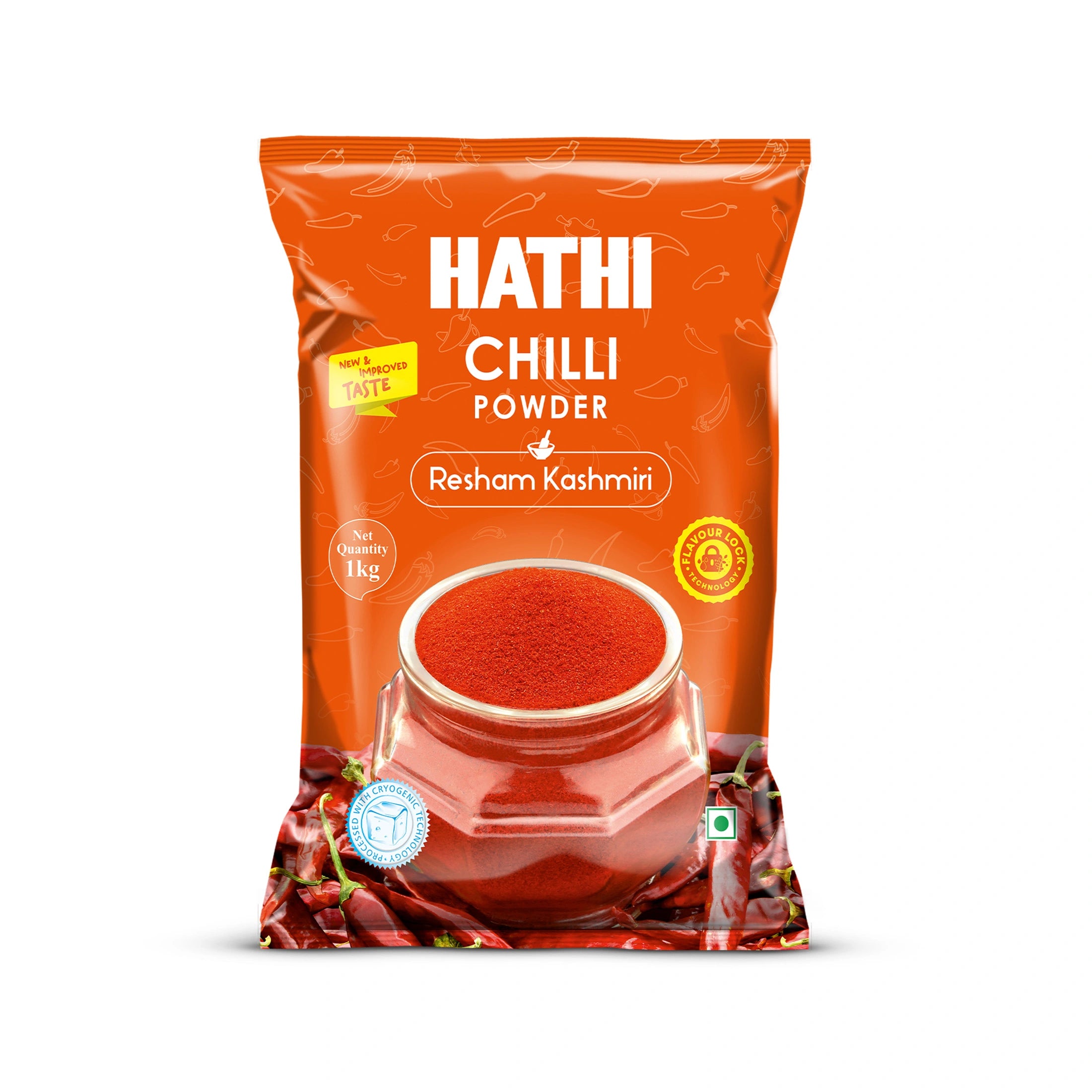


Ganthoda Powder | Pipramul


Wholesome
Goodness

Hygienically
Packed

Clinically
Proven

No Artificial
Colors

Notice Stronger
Aroma
Prefer It Over
Regular Pepper
Say It Elevates
Everyday Cooking
Description
Hathi masala ganthoda powder is made from the dried roots of Piper longum. It’s known as pipramul across Gujarat. Hathi masala cleans, dries, and grinds these roots using cryogenic technology at –150°C. This grinding method preserves its natural warmth and fragrance. This masala has been used in Indian households and traditional Ayurvedic practices for ages. It’s mostly used in winter dishes, Gujarati curries, adadiya pak, and homemade pickles. Available in 100g and 1kg packs.
How is Hathi Masala Ganthoda Powder Different?
- Cryogenic Ground at –150°C
- Lab tested for 20+ parameters
- Hygienically packed
- No artificial additives or dyes
- FSSAI and ISO 22000 certified
What Is Ganthoda Powder?
It’s made from the dried root of the Piper longum plant, also known as pipramul in Gujarati and Hindi. It isn’t a chilli or a pepper; it’s a root spice with a warm, strong, earthier flavour than regular pepper. The key compound present in pipramul root is piperine. It is responsible for this spice's natural warming quality. This spice has been a reliable masala across Gujarati families for ages. You can use it in traditional winter recipes like adadiya pak, Ganthoda bataka sabji, homemade achar, and kadhi.
Sourcing and Origin
A good-quality pipramul is mainly grown in the farms across Gujarat and neighboring states, including Rajasthan and Madhya Pradesh. Hathi Masala sources the Ganthoda roots from reliable farmers across these regions. The nutrient-rich soil and climate in these regions produce ganthola with high piperine content. Roots with poor fragrance or low heat are rejected before processing.
Why Cryogenic Grinding Matters for Pipramul Powder
Traditional machines generate heat, which evaporates the active compound (piperine) in the ganthoda, giving it its warming quality and strong, earthy smell. The regular methods give you a pale, weak powder. Hathi masala uses cryogenic technology to cool the roots to –180°C with liquid nitrogen before grinding. At this low temperature, the piperine compound locks into each particle. It gives you a strong and warm fragrance, just like freshly broken Pipramul.
How to Use Ganthoda Powder
- Adadiya Pak: Add 0.5-1 tsp during cooking the ghee-and-wheat. This powder adds its signature warming quality to adadiya.
- Ganthoda Bataka Sabji: Add 0.25 tsp along with your other regular spices when the potatoes are half-cooked. It gives the dish a gentle spice without overpowering it.
- Homemade Achar: Mix 0.5 teaspoon into your raw mango or mixed vegetable achar masala. This powder deepens the overall flavour of the achar and helps it stay punchy.
- Winter Dal: Use a pinch of hot ghee in the tadka along with other whole spices. It gives a beautiful warmth to your dal.
- Herbal Tea / Kadha: Stir in a pinch of this powder in warm water along with ginger, tulsi, and black pepper. This is an authentic Gujarati remedy for a cold and cough.
- Laddoo and Sweets: Add a pinch to the til laddoo, methi laddoo, or any winter sweet. It adds a warm background flavour that balances the sweetness well.
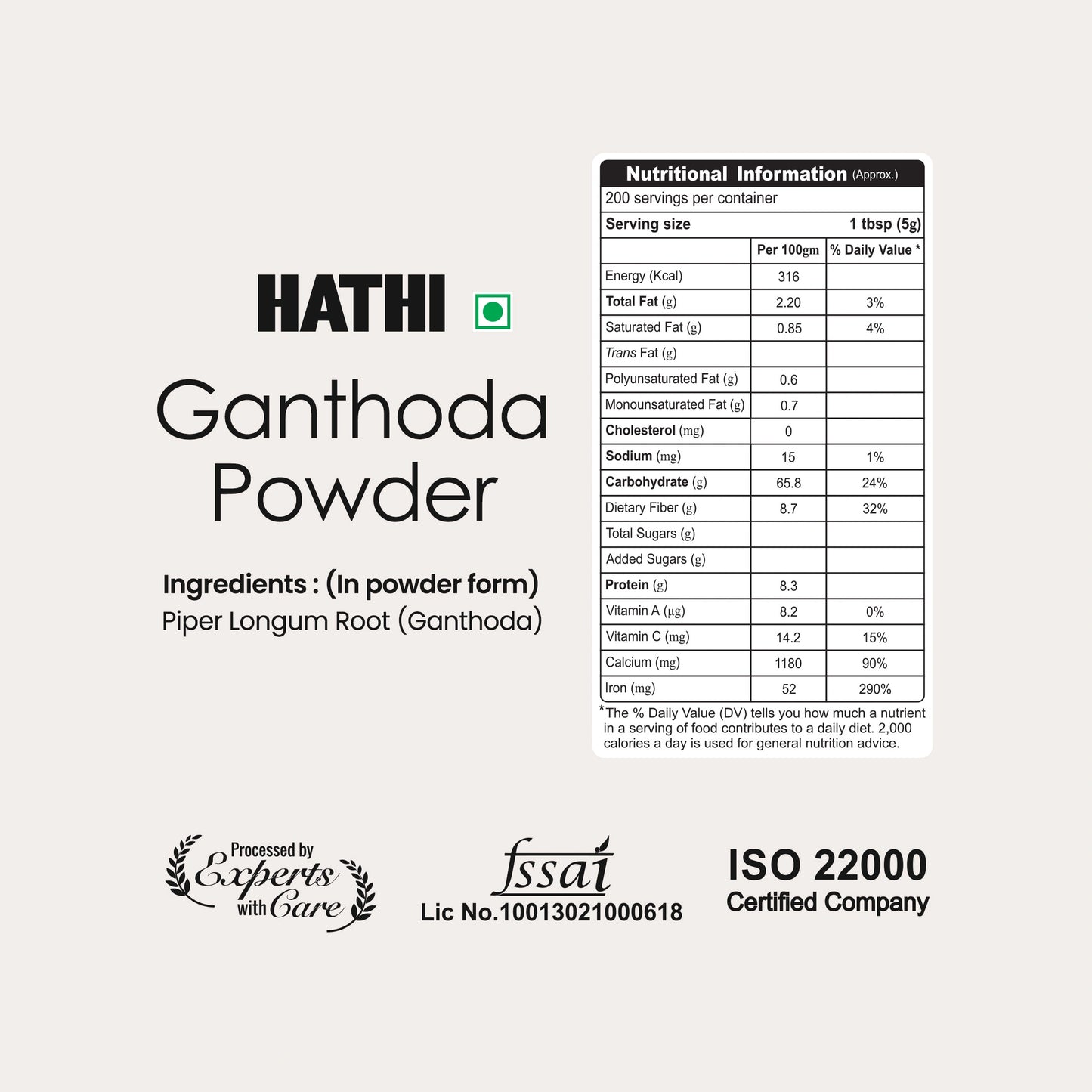
Nutritional Information
|
Nutrient |
Per 100g |
% Daily Value |
|
Energy (Kcal) |
316 |
- |
|
Total Fat (g) |
2.20 |
3% |
|
Saturated Fat (g) |
0.85 |
4% |
|
Trans Fat (g) |
0 |
- |
|
Polyunsaturated Fat (g) |
0.6 |
- |
|
Monounsaturated Fat (g) |
0.7 |
- |
|
Cholesterol (mg) |
0 |
- |
|
Sodium (mg) |
15 |
1% |
|
Carbohydrate (g) |
65.8 |
24% |
|
Dietary Fiber (g) |
8.7 |
32% |
|
Total Sugars (g) |
- |
- |
|
Added Sugars (g) |
- |
- |
|
Protein (g) |
8.3 |
- |
|
Vitamin A (µg) |
8.2 |
0% |
|
Vitamin C (mg) |
14.2 |
15% |
|
Calcium (mg) |
1180 |
90% |
|
Iron (mg) |
52 |
290% |
Nutritional values are indicative. Exact values may vary by batch.
Benefits of Hathi Ganthoda Powder
- Gives the body natural warmth: Piperine, a compound found in pippali root, produces a gentle internal warmth. This is why it’s good for winter uses.
- Supports Digestion: When added to preheated oil or ghee, it helps the body digest heavy winter dishes such as adadiya, methi laddoo, and rich dals more comfortably.
- Good for Cold and Cough: Adding a pinch of Ganthoda powder to a kadha is a widely used Gujarati home remedy for colds. It has been used this way for ages.
- Rich in Iron: This powder gives 33% of the daily value of iron per serving. That’s why it’s a genuinely useful spice for daily nutrition.
- Calcium and Magnesium: It contains both minerals in meaningful amounts, which is why this spice has been used in Ayurvedic medicines for joint and bone care.
Storage: Transfer the pipramul powder to an airtight container after opening. Store the same container in a cool, dry place away from moisture, heat, and direct sunlight. Always use a dry spoon, as moisture can ruin its smell and sharpness. Use it within 8-12 months of opening to get better aroma and taste.
Quality You Can Trust
Hathi Masala has been making spices since 1952. Our Ganthoda Powder is made from Pipramul roots sourced from reliable growing regions of Gujarat and nearby areas. These gingers are freshly harvested and are naturally dried to enhance their shogaol content. They’re then ground using cryogenic technology at –150°C. This method preserves the natural compounds and smell. Each batch is lab-tested for purity and safety, and packed without human contact at any stage.
- FSSAI Certified and ISO 22000 Manufacturing
- Lab Tested Every Batch
- Cryogenic Ground at -150°C
- Hygienically Packed
- Flavour-Locked 3-Layer Packaging
Buy hathi ganthoda powder online. It’s available in 100g and 1kg packs to suit your daily and bulk needs.
More from the Hathi Masala Kitchen
Explore related collections:
- Everyday Masala, Turmeric, coriander, cumin & more for daily cooking
- Turmeric Powder, Selam, Rajapuri, and Super Turmeric
- Whole Masala, Whole spices for tadka and traditional cooking
Recipes
History & Source
Ingredients
FAQ


Spice up your kitchen


