









Ajwain (Carom Seeds) | High Thymol, Gujarat Origin, Fresh Harvest


Wholesome
Goodness

Hygienically
Packed

Clinically
Proven

No Artificial
Colors
84%
Notice Stronger
Aroma
91%
Prefer It Over
Regular Pepper
76%
Say It Elevates
Everyday Cooking
Description
Ajwain Seeds, Must-Have for Every Indian Household
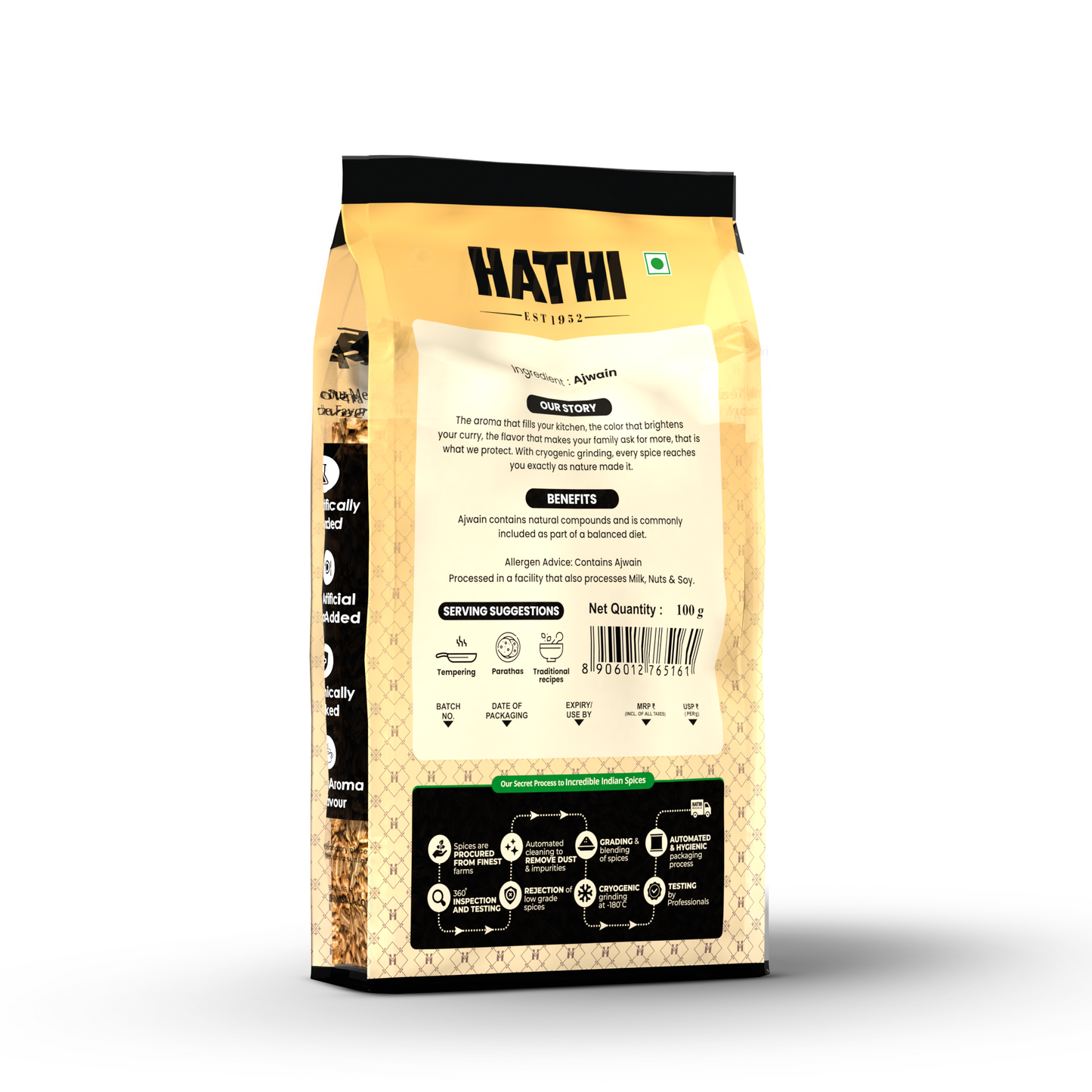
Hathi Masala Ajwain Seeds are fresh carom seeds sourced from Gujarat, a region with a dry climate that naturally produces seeds rich in the thymol compound. The seeds are machine-cleaned to remove every stem, dust, and stone. They are packed in 3-layered packaging to retain thymol, a volatile compound that makes it effective in the kitchen and your everyday wellness routine. For carom water, pakoras, tadka, parathas, and relief from digestion.
What Makes Hathi Masala a Credible Choice?
- Hygienically Packed
- Fresh. Effiecient. Pure
- Lab Tested Every Batch
- Flavour locked packaging
- Exported to 60+ Countries
About Hathi Masala Ajwain Seeds (Carom Seeds )
What are Ajwain Seeds (carom seeds )?
Ajwain is a small, ridged seed from the Trachyspermum ammi plant. It resembles cumin or fennel seeds but is an entirely different spice, characterized by a sharp taste and a strong medicinal fragrance. Most Indian families keep it in two places: the kitchen spice box and the medicine cabinet. It’s used in pakoras, parathas, dal tadka, and pickles. It is also the base ingredient of ajwain water, one of the most common traditional home remedies of Indian homes for gas, bloating, and indigestion. The thymol compound is responsible for both the flavour and the wellness properties.
Sourcing and Origin
Hathi Masala sources ajwain from trusted farmers of Gujarat. Its dry, semi-arid climate and well-drained soil produce carom seeds with naturally high levels of the thymol compound. Gujarat is one of the primary states in India that produces carom, alongside Rajasthan and Madhya Pradesh. Seeds raised in dry conditions usually contain less moisture and a higher concentration of essential oils, which play an important role in the effectiveness and shelf life of the final product. The carom seeds Hathi sources are always from fresh harvest, not from stored old stock. The fragrance of freshly harvested carom seeds is sharper than that of stored seeds.
Why Thymol Content Matters in Ajwain
Thymol is the active component of ajwain seeds. It’s the reason behind the strong, medicinal aroma and its bitter heat on the tongue. A higher thymol content translates into better cooking flavour and stronger ajwain water.
The problem with poor-quality or old carom seeds is that thymol, a volatile compound, is easily lost. It vaporizes when exposed to heat and moisture. Poor storage leads to loss of thymol compound from the seeds. By the time they reach your kitchen, it may look fine, but it has already lost much of its strength. You end up adding more to get the same effect.
Hathi tests every batch for thymol content before packaging. The 3-layer packaging is designed to keep the compound from the seeds until they reach your kitchen.
How Hathi Masala Processes Ajwain
Ajwain is a small, lightweight seed that comes with stems, stones, and dust from the farm. Standard cleaning machines designed for larger spices miss these small, fine impurities. Hathi Masala uses fine-mesh automatic cleaning systems for small seeds. Every batch of carom undergoes a 9-step automated cleaning procedure that separates impurities without human contact.
After cleaning, the seeds are packed in 3-layer sealed packaging that blocks moisture, light, and air. It preserves the thymol content from the day of packing until the day you open the pack. Each batch is lab-tested before dispatch.
Where to Use Ajwain in Your Everyday Diet and Dishes
For Ajwain Water, add ½ teaspoon of whole carom seeds to 1 glass of water. Leave it overnight. Strain and drink the next morning. This has been a common everyday practice in Indian families for generations, particularly for digestive comfort.
For Parathas and Poori, add ½ teaspoon of whole Carom seeds to the atta dough. The seeds mix evenly in the dough and release their aroma when the bread hits the hot pan or tawa.
For Pakoras, add a pinch of carom to the besan batter. It helps reduce the heaviness of fried pakora and adds a unique taste that most people associate with street-style pakoras.
For Dal Tadka, add a small amount of carom to the hot oil or ghee, along with cumin seeds and hing. It gives a layer of heat to the dal or curry.
For Acidity and Gas Relief, dry roast ½ teaspoon of Carom seeds in a pan for 30 seconds. Chew them slowly with a pinch of black salt. This is one of the most widely used traditional home remedies for immediate relief from gas and indigestion.
Benefits of Ajwain in Your Daily Routine
Ajwain has been used in Indian Ayurveda and home medicine traditions for ages. Thymol, the primary active compound, has antioxidant properties. In Indian households, it is most commonly used for gas and digestive discomfort. Ajwain water is a common morning habit. Carom seeds are naturally rich in fiber, calcium, and essential oils. They are also gluten-free.
These are natural properties of carom seeds. They aren’t a medicine and do not replace medical advice.
Storage: Store fresh carom seeds in a glass airtight container. Keep it in a dry spot away from moisture and direct sunlight. Best consumed within 12 months of opening. The 3-layer sealed pack of Hathi Masala keeps it fresh until it’s opened.
Quality You Can Trust
Hathi Masala has been part of Indian spices and whole spices manufacturing since 1952. Ajwain seeds are cleaned using fine-mesh automatic cleaning systems built for tiny spices. It removes stems, chaff, dust, and broken pieces without human contact. Every batch is tested for thymol content, moisture levels, and safety before packing. The 3-layer sealed packaging keeps thymol in.
- FSSAI-Certified and ISO 22000 Manufacturing.
- Lab tested every batch.
- Cryogenic Grinding Technology
- Hygienically Packed. Dedicated sterilization facility.
- Flavour-locked packaging
More from the Hathi Masala Kitchen
Explore related categories:
Salts — Black Salt, Rock Salt & Pink Salt for better taste and daily use
Blended Spices, Kitchen King, pav bhaji, chana masala & more
Pickle Masala, Ready-to-use masala mixes for homemade achars.
Recipes
History & Source
Ingredients
FAQ

Spice up your kitchen