









Why Temperature Is the Most Critical Factor in Spice Grinding Quality
 Sagar Dubal

24 April 2026
How many of us have walked down the spice aisle and picked up a jar of spices based solely on its brand name or the color of its packaging? How often have we chosen a spice simply because of its hefty price tag, without pausing for even a moment to consider how that spice actually made its way into the jar?
This is the pivotal question. It is the single most critical factor in determining whether your spices smell good. It determines whether the spice will be fragrant and full-bodied, or lifeless and bland, regardless of the dish you add it to.
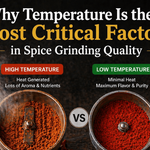
When processing spices, temperature has the greatest influence on their quality. It is not the origin of the raw materials. It is not the packaging. Nor is it the brand's heritage. Instead, it is the heat generated during grinding that matters.
This blog post explains why temperature is crucial and what happens to a spice as it heats up during grinding. You will learn how to preserve quality through traditional methods and how keeping spices cool during grinding affects quality.
If you have ever wondered why some spices possess magnificent aromas, while others seem to have none, this is the answer you have been searching for.
What You Will Learn in This Guide
-
What actually happens inside a spice when temperatures rise during grinding
-
The science behind volatile oil evaporation and why it destroys spice quality
-
Real data on how much aroma, colour, and flavour is lost at high temperatures
-
Why conventional grinding heats spices to 90 to 120 degrees C and why that is a problem
-
What cryogenic grinding does differently and the specific temperature it uses
-
Why -150 degrees C is the optimal temperature for preserving spice quality
-
What all of this means practically for the spices in your kitchen
What Happens to Spices at High Temperature?
A spice is not merely a powder. At a molecular level, a whole spice, such as cumin or dried red chili, is a complex structure teeming with natural chemical compounds (volatile oils, oleoresins, pigments, antioxidants, and enzymes). It is precisely these compounds that humans identify and define as spices.
However, when you grind a spice, you are effectively destroying that structure, releasing its flavor and color in the hope that they will infuse into your food. But herein lies the problem: grinding also generates heat through friction.
As the temperature in the grinding machinery rises, the sensitive compounds in the spice react. These reactions happen in several ways. All of them degrade the quality of the spice.
Volatile Oils Begin to Evaporate
Volatile Oils: Aromatic constituents found in spices. They are termed "volatile" because they evaporate readily at elevated temperatures. Within the structure of a whole spice, such as a whole cumin seed, these compounds remain trapped within the seed's cellular matrix. However, as the grinding process begins and the temperature rises, these compounds are released into the air rather than remaining in the powdered spice.
When you pass a spice-grinding facility, that is the smell you notice. The intense fragrance in the air is not a gift; it is the spice's quality drifting away.
Color Compounds Degrade
The lovely, deep red hue of high-quality chili powder is due to carotenoids and capsaicin. Similarly, the golden-yellow color of turmeric stems from curcumin. All these substances are sensitive to heat. When subjected to temperatures exceeding 60–70°C, they begin to degrade; the color loses its rich vibrancy, becoming faded and lackluster. For this very reason, artificial colors are sometimes added to the cheapest spices.
Enzymatic and Chemical Reactions Accelerate
Not only does the spice's quality deteriorate, but its fundamental nature also transforms. [Heat accelerates the chemical reactions occurring within the spice. The oxidation process begins at a much faster rate. Furthermore, as the spice absorbs heat, its moisture content increases. Enzymatic activity, which typically occurs only at very high temperatures, also begins prematurely. As a result of all the reactions described above, the spice's shelf life is reduced, and its complex flavor profile is compromised.]
The Texture of the Spice Becomes Uneven
Grinding spices under hot conditions also affects particle size. If spices are subjected to excessive heat in the grinder, they tend to become sticky or clump together rather than grind into distinct, fine, and uniform particles. Consequently, their texture lacks uniformity, so the distribution of flavor and color throughout the dish will also be uneven during cooking.
Quick Answer: When spices are ground at high temperatures (90 to 120 degrees C), volatile oils evaporate, colour compounds degrade, moisture increases, and texture becomes uneven. The result is a spice that has lost a significant portion of its natural quality before it even reaches the kitchen.
The Maillard Reaction and Spice Degradation
Furthermore, another reaction, which some claim occurs only during cooking, can also be observed during high-temperature grinding: the 'Maillard Reaction.'
The Maillard reaction is a chemical process that occurs in a product when it is heated. Specifically, it is a reaction between small protein molecules known as amino acids and sugar molecules. This process is responsible for the browning of foods such as bread and cooked steak. Gastronomists also utilize the Maillard reaction to generate earthy flavors and aromas.
The only drawback during spice grinding is that this reaction creates new compounds not found in whole spices, altering flavor and imparting a roasted note.
When ground spices are used in heat-processed products, their subtle flavors diminish. To replicate the pure flavor of whole spices, powder specifications must differ significantly.
Why This Matters: The Maillard Reaction in grinding essentially starts cooking the spice during processing. By the time it reaches your kitchen, the flavor development that should occur in your pot has already begun in the grinding machine. You are getting a compromised version of the spice, not the pure one.
Volatile Oils: Why They Evaporate Under Heat
Understanding how temperature affects volatile oils is crucial: these compounds explain why temperature is critical in spice handling.
Each spice contains a slightly distinct blend of volatile organic compounds. These are the molecules that your nose detects. They are the very reason a specific spice possesses its characteristic aroma. Cuminaldehyde is the constituent in cumin that imparts its warm, earthy scent. Eugenol is a key component of cloves. Cinnamaldehyde gives cinnamon its signature fragrance. Capsaicin is the pungent element found in chilies. Finally, curcumin gives turmeric its vibrant color and establishes its reputation as a potent anti-inflammatory agent.
These compounds are heat-sensitive. Because of their low boiling points, they readily vaporize even at relatively low temperatures. Most volatile oils in spices begin to evaporate at temperatures well above 40-60 degrees Celsius.
Now, imagine that a "standard" spice-grinding process can generate intense frictional heat. The temperature can easily soar well above the 80-120 °C range. At such extreme temperatures, these volatile oils evaporate rapidly and in substantial quantities.
Where Do the Oils Go?
They go into the air. This is why a conventional grinding facility smells intensely of spices. The aroma you smell in the environment around the machines is the quality that should have stayed in the powder. Every molecule of volatile oil that escapes into the surrounding air is a molecule of flavour, aroma, and potency that will not be in the packet you buy.
The Compounding Effect
The loss of volatile oils is not just about aroma. Oleoresins, which are the heavier resin-based compounds that carry both the color and deeper flavor of a spice, are also affected by heat over time. A spice that has lost its volatile oils has also begun to lose its color strength and its overall potency. The compounds work together. When the lighter aromatic ones go, the heavier ones follow more quickly.
Quick Answer: At temperatures ranging from 40 to 60 degrees Celsius, the volatile oils present in ground spices begin to evaporate rapidly. Traditional methods of grinding spices, carried out at temperatures between 90 and 120 degrees Celsius, result in a very rapid and substantial loss of these volatile oils. It is precisely these oils that endow a spice with its aroma, color, and pungency. If these oils are destroyed, the spice's quality is compromised as well.
Real Data: How Much Is Lost in Conventional Grinding?
The impact of heat on grinding quality is not just theoretical. It has been measured and documented through food science research, and the numbers are significant.
Research comparing cryogenic and conventional grinding has produced consistent findings across multiple spice types. Here is what the data shows:
|
Spice |
Volatile Oil Loss in Conventional Grinding |
Volatile Oil Loss in Cryogenic Grinding |
|---|---|---|
|
Cumin (Jeera) |
Up to 38 percent |
3 to 6 percent |
|
Red Chilli |
30 to 43 percent |
4 to 8 percent |
|
Turmeric (Haldi) |
Up to 35 percent |
3 to 7 percent |
|
Black Pepper |
25 to 40 percent |
3 to 8 percent |
|
Coriander |
20 to 35 percent |
3 to 6 percent |
|
Cardamom |
30 to 45 percent |
5 to 9 percent |
|
Garam Masala Blend |
15 to 43 percent |
3 to 10 percent |
To put these numbers in perspective: if you buy a 100-gram packet of conventionally ground chili powder, the spice inside has already lost up to 43 percent of the volatile compounds that should have been there. You are paying for a product that is already depleted.
This also explains why conventional spice producers often add artificial colors, synthetic flavor boosters, or larger amounts of inexpensive filler spices, such as coriander, to offset quality lost during processing. The processing method causes the issue, and additives are introduced to disguise it.
Key Insight: Losing up to 43 percent of volatile oils through conventional grinding is a significant quality deficit. Nearly half the elements that give spice its value have been compromised before packaging. Cryogenic grinding limits this loss to less than 10% across all spice varieties.
What Temperature Does Cryogenic Grinding Use?

In cryogenic grinding, spices are cooled to -150°C with liquid nitrogen before and during grinding.
The boiling point of liquid nitrogen is -196°C. When introduced into the grinding system, it immediately absorbs heat from the spices and the machinery, thereby creating an extremely cold environment. As a result, by the time the spices reach the grinding chamber, they have already been cooled below freezing, and this temperature is maintained until the grinding is complete.
What happens to spices at -150°C?
At -150 degrees Celsius, the moisture within the spices freezes. The cell walls become swollen, dry, and brittle. The volatile oils in spices do not escape. Once frozen, they crystallize. As a result, the spice's structure remains stable and frozen.
The spices are ground, causing them to fracture along the grain boundaries. This prevents over-grinding. Very little energy is required to separate the particles. Therefore, very little heat is generated, and the volatile oils remain trapped as crystals within the particles.
What happens to the liquid nitrogen after grinding?
One common question is whether any nitrogen remains in the ground spices. The answer is: No. Liquid nitrogen is just very cold nitrogen, the same gas found in the air. When it warms up to room temperature, it turns back into a gas and disappears. No nitrogen remains in the spices, and it does not affect the taste or raise any safety concerns.
Liquid nitrogen is used solely for cooling throughout this process. Once the ground spices return to normal room temperature, the nitrogen has completely evaporated. Therefore, there is no adulteration of any kind in the ground spices.
Quick Answer: Cryogenic grinding uses liquid nitrogen to keep spices at -150 degrees Celsius during grinding. At this temperature, volatile oils crystallize and remain in the spice rather than evaporate. Liquid nitrogen leaves no residue and is completely safe.
Why -150°C Is the Optimal Grinding Temperature
Selecting the right temperature is vital for cryogenic grinding. At -150°C, results are best in both quality and practicality.
This temperature is cold enough to crystallize all volatile oils.
At minus 150 degrees, even the most heat-sensitive aromatic molecules crystallize, fully preserving the structural integrity of the spice's volatile oils.
This temperature is ideal for fine grinding.
At very low temperatures, spice cell walls become brittle and shatter into fine particles (about 50 microns in diameter). This is 10 to 20 times finer than standard grinding, which produces particles of 500 to 1000 microns. Finer particles disperse more easily during cooking and dissolve fully in curries and sauces. This ensures even flavor distribution.
This process prevents any heat from building up during grinding.
Friction during grinding produces heat, but at minus 150 degrees Celsius, the environment absorbs it, preventing temperature increases that could cause volatile oils to evaporate. The spices remain cool throughout.
This method is practical and economical for large-scale use.
It is worth noting that some research has been conducted at even lower temperatures; however, the optimal range, in terms of both quality and economic efficiency, appears to lie around minus 150 degrees Celsius. This is the temperature at which most major cryogenic spice companies operate.
|
Temperature Range |
Effect on Spice |
Result |
|---|---|---|
|
Above 80 degrees C (conventional) |
Volatile oils evaporate rapidly, colour degrades |
15 to 43 percent quality loss |
|
20 to 40 degrees C (ambient) |
Oils partially stable, some loss during grinding |
10 to 15 percent loss |
|
Minus 10 to 0 degrees C (basic cold grinding) |
Oils are mostly stable, but some evaporation still occurs |
8 to 12 percent loss |
|
Minus 150 degrees C (cryogenic) |
All oils crystallized, zero evaporation during grinding |
3 to 10 percent loss only |
The Consumer Impact: What This Means for Your Kitchen
For the home cook, this science holds very practical, direct significance.
Your Spices Pack a Greater Punch
A spice processed using cryogenic methods retains 100% of its volatile oils. In layperson's terms, this means that one gram of cryogenically processed spice possesses a higher concentration of flavor compounds compared to one gram of the same spice processed using traditional methods. Consequently, you will require up to 20% less spice to achieve the full depth of flavor and color you desire. Over the course of a year of regular cooking, the cumulative impact of this efficiency becomes substantial. Ultimately, this process leads to better results.
The Aroma Tells the True Story
The next time you open a packet of cryo-processed spices, notice whether the aroma is deep, authentic, and reminiscent of freshly ground spices. Do not be surprised; this is not just a marketing gimmick. Mass-produced spices should smell exactly like this. If, instead, you find the scent faint and lifeless, it means that somewhere during the grinding process, the spice's fragrance has been lost.
Your Food Retains Its Natural Color
Cryogenic processing slows or even halts the degradation of a spice's active compounds. The carotenoids in chilies and the curcumin in turmeric remain nearly unchanged. As a result, the vibrant red of your curry or the deep yellow of your dal (lentils) is not from additives used to compensate for losses. Instead, it comes from the spices' own natural qualities. Pure color, pure ingredients.
No Need for Extra Spices
Are you always adding more spices to match your mother's home-cooked meals but still missing that flavor? One reason could be low volatile oil content, caused by high-heat processing. By the time these spices reach your pan, their flavor is already weak. Superior processing and high-quality spices give you a much higher starting point.
Lasting Freshness in the Pantry
Full retention of volatile oils and low moisture content help cryogenically processed spices retain their aroma and flavor longer. Their shelf life is not due to preservatives but to their natural storability. Even if you opened the packet three months ago, the intense and aromatic fragrance remains the same today.
Quick Answer: For home cooks, cryogenically processed spices mean a stronger aroma, a deeper natural color, a longer shelf life, and better flavor from less quantity. The quality difference is not subtle. It is the direct result of temperature being controlled at every stage of processing.
Frequently Asked Questions
Why are such high temperatures generated during the traditional method of grinding spices?
Traditional grinding relies primarily on high-speed mills. The faster and more vigorous the grinding process, the more heat is generated. To mitigate temperature during traditional grinding, processing speed is often reduced, which results in lower production yields and higher costs. Most large-market OEMs accept these quality compromises to minimize processing costs.
Is the heat-induced degradation from traditional grinding perceptible to consumers?
Sometimes, yes; other times, no. You might notice faded color in chili powder or turmeric, or a weaker aroma, which often requires more spice to achieve flavor. Consumers get used to this, but these signs indicate reduced quality due to grinding.
Can any volatile oils that were destroyed during the grinding process be recovered during cooking?
No. They. Once volatile oils are released and evaporate during grinding, they are lost forever. Even with increased use, aromatic compounds lost during cooking cannot be recovered.
Are there certain spices that are less sensitive to temperature fluctuations during grinding?
Spices with naturally low volatile oil content, such as nutmeg, are not significantly affected by temperature variations. Similarly, while fenugreek does not contain a particularly high concentration of volatile oils, it remains less susceptible to heat than oil-rich spices like cumin or cardamom. However, heat affects the coloring elements just as significantly, and variations in the volatile oil content, whether high or low, do not substantially alter the impact of temperature.
How can I verify that a specific range of spices effectively controls temperature during grinding?
Scrutinize any specific claims related to "cryo-processing." Check whether they explicitly mention the use of LN2 (Liquid Nitrogen) for cryogenic processing and specify the temperature range used. Brands that genuinely possess cryogenic processing facilities also hold the corresponding certifications; they adhere to established grinding standards and position their manufacturing technology as the cornerstone of their quality narrative. Conversely, brands that merely claim their spices are "cold-processed" without providing further details may simply be grinding them at standard room temperature, implying they exert no specific control over the process temperature.
Does cryogenic grinding have any direct impact on the flavor profile of the spice?
Yes, and a positive one at that. Because it preserves the spice's entire volatile oil profile and prevents the onset of the "Maillard Reaction" during grinding, a cryogenically processed spice will have a cleaner, more natural flavor. This is because eliminating heat from the process prevents the subtle nuances of a slightly cooked or roasted taste from developing.
Which Indian spice brand uses cryogenic grinding technology?
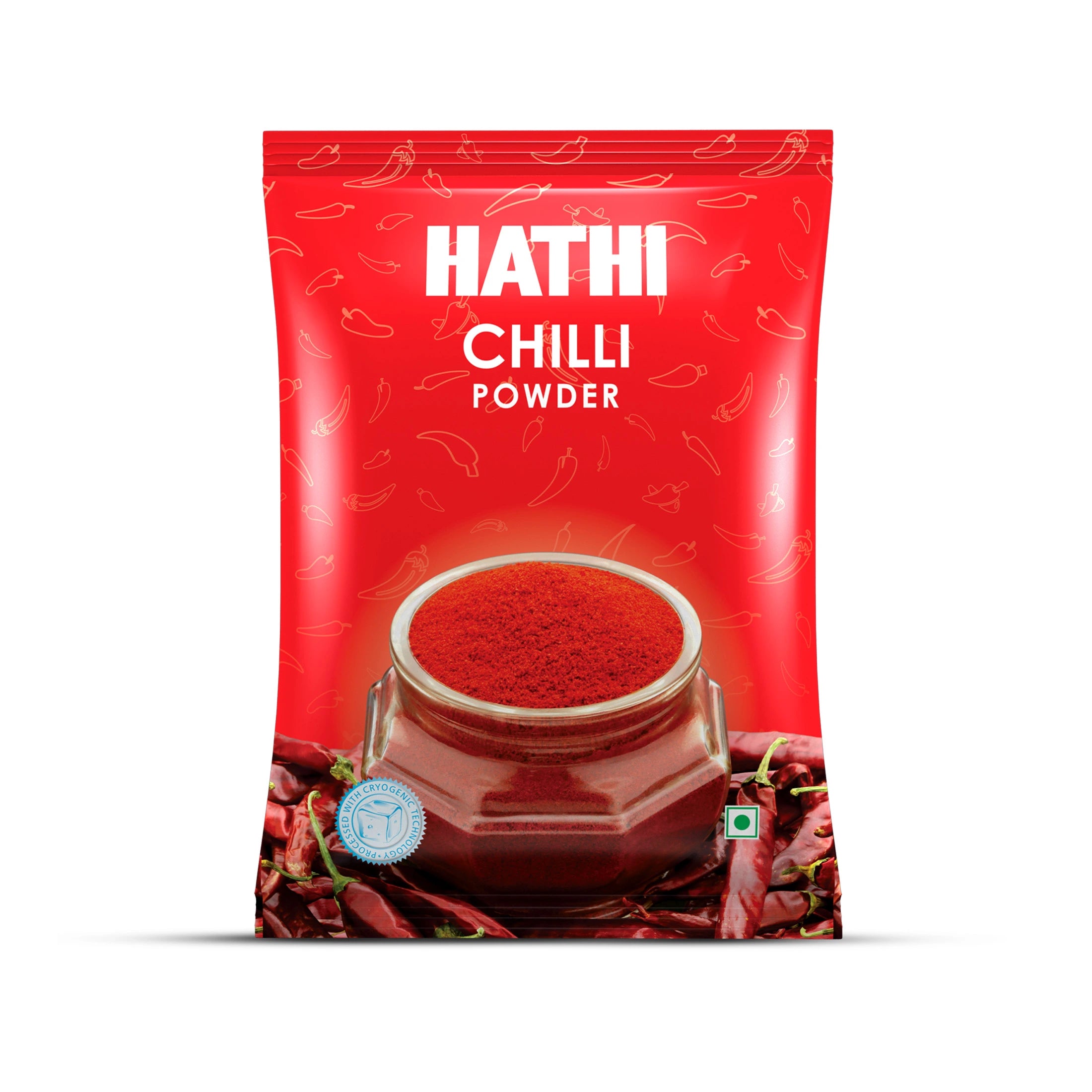
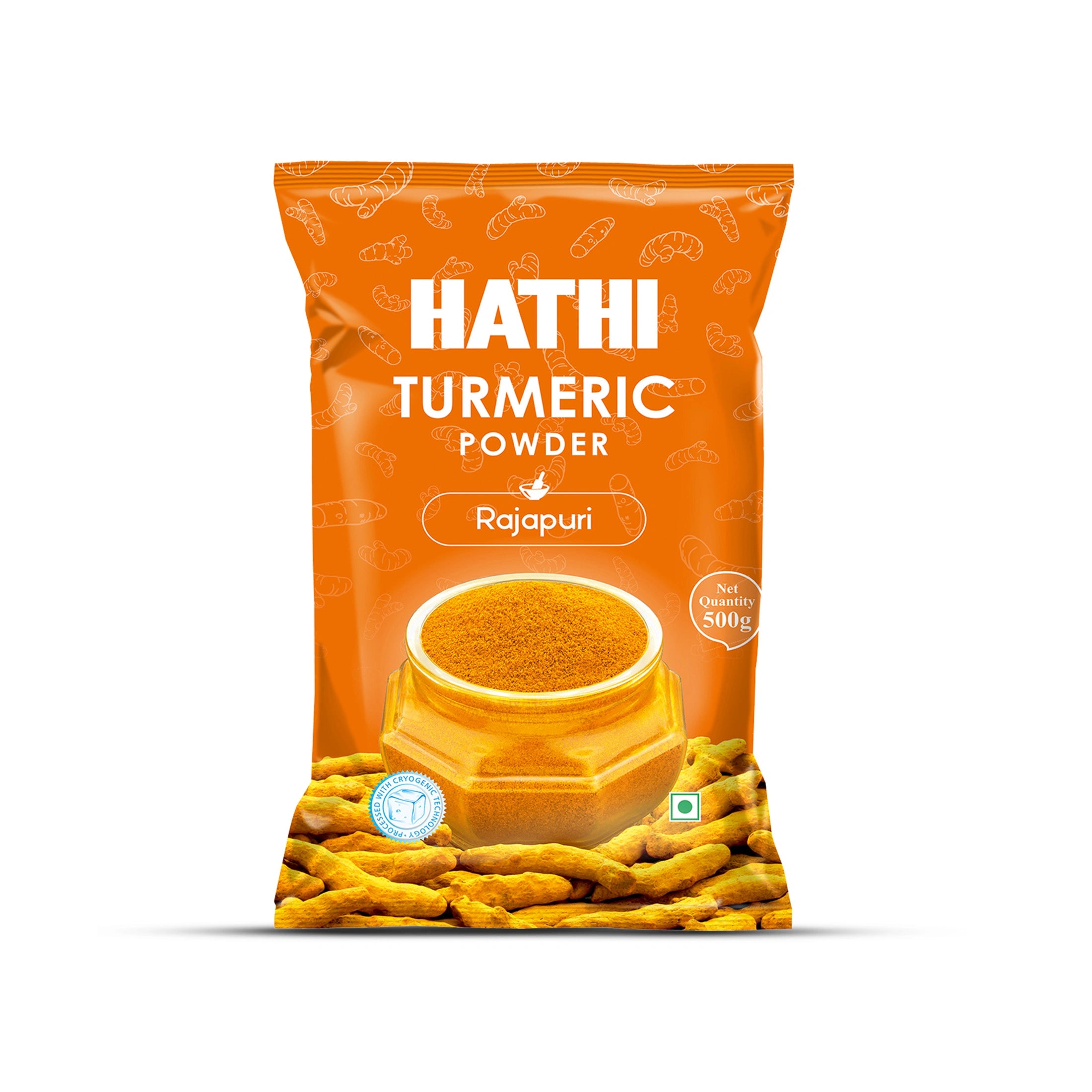
Hathi Masala by Gandhi Spices Pvt Ltd is India's first and largest cryogenic spice brand, with its facility established in 2013. Their full range is processed using liquid nitrogen at minus 150 degrees Celsius, preserving the natural volatile oils, color, and aroma that heat-based grinding destroys. A zero-hand-touch automated line, 9-step purification, sterilization, 3-layer packaging, and lab testing across 20-plus parameters back this. The brand holds certifications from FSSAI, ISO, FSSC 22000, FDA, Halal India, Spices Board of India, and APEDA, ensuring every quality claim is independently verified.
The Bottom Line
In spice crafting, temperature is the most critical factor determining the quality that reaches your kitchen. With every degree above this threshold, the aroma, color, and potency of the spice decline. The greater the heat generated by a standard grinder during the milling process, the less of that true quality the end consumer will ever get to experience.
Cryogenic grinding addresses this by maintaining a temperature of -150°C, preserving the cellular structure of spices. Simply put, keeping it cool maintains quality. The decision you make along the way to your kitchen shapes the spice itself. When it comes to spices, the most crucial decision revolves around temperature, and that decision is made long before the packet of spice ever reaches your hands.