

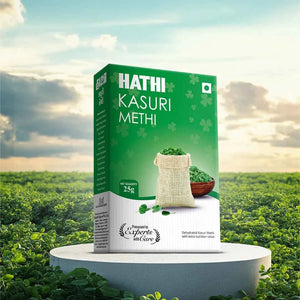
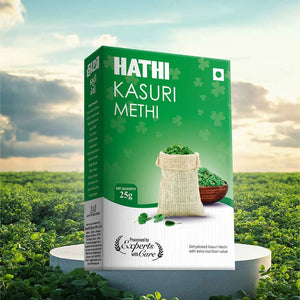
Kasuri Methi | Kasoori Methi
Dried Methi Leaves | Aromatic | Adds Richness | Cryogenic Grinding
 sold in last hours
Guarantee Safe Checkout

Bulk Inquiry


Manufactured & Marketed By: Gandhi Spices Pvt.Ltd.
Rajkot-Jamnagar Highway, Khandheri, Rajkot, Gujarat - 360006
Country of origin India
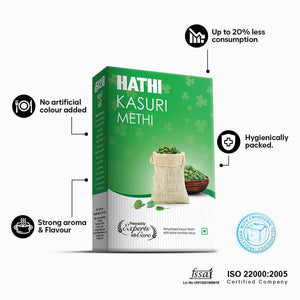
 No artificial colour added.
 Microbiologically tested.
 Scientifically graded.
 Hygienically packed.
Kasuri Methi | Kasoori Methi
-
Description
Buy Kasuri Methi Online
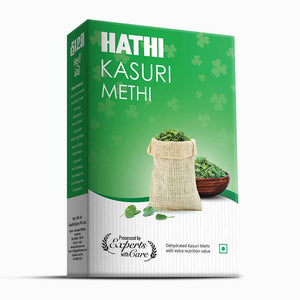
Hathi Masala kasuri methi is just dried fenugreek leaves. The fresh leaves are carefully dried to preserve their natural fragrance. These dried fenugreek leaves have a gentle aroma that enhances any dish. Hathi masala dry these leaves with care so they stay green and the smell stays strong within every pack. Crush it slightly with your hands and add it at the end of the cooking process.
Why Choose Hathi Masala?
-
Hand-picked fenugreek leaves
-
Lab tested for 20+ parameters
-
Hygienically packed
-
No artificial additives or dyes
-
FSSAI and ISO 22000 certified
What is Kasuri Methi?
Hathi Masala kasuri methi is dried fenugreek leaves. Fresh methi has a slightly bitter taste. When the leaves are dried, the bitterness goes away. It gives off a sweet, warm fragrance. This fragrance gives dal makhani, paneer gravies, and butter masala a restaurant-style taste. Some people call it Kasoori Methi or Sukhi Methi. Hathi Masala kasuri methi adds a finishing touch to any dish. Add Hathi Masala kasuri methi at the end of cooking to keep the dish's aroma fresh.
Sourcing and Origin
Hathi masala sources the whole fenugreek leaves from reliable regions across Gujarat and nearby farms. The dry climate of these regions gives the leaves a strong fragrance. The leaves are carefully picked when they’re fresh and green, then cleaned and dried accordingly. Leaves that have dull colour or a faint smell are rejected before processing. Hathi Masala sourced only good-quality fenugreek leaves.
How Hathi Masala Kasuri Methi Aroma Stays Intact
The sharp aroma of Hathi Masala kasuri methi comes from the oils in the leaves. If the leaves are dried quickly, these oils evaporate, leaving the leaves without a pleasant smell. Hathi Masala dries the fenugreek leaves slowly to keep the oils. Because the smell is strong, you only need a bit of Hathi Masala kasuri methi to flavour a whole dish. These leaves are not ground, so they stay soft. You can crush them between your palms before adding.
How to Use Kasuri Methi in Your Daily Dishes
-
Dal Makhani: Take 0.5 teaspoon of hathi masala kasoori methi and crush it between your palms, then add it at the end of cooking. This gives your dish a smoky taste like the ones you get at restaurants.
-
Paneer Butter Masala: Mix 0.5 teaspoon of hathi masala kasoori methi with the masala base for 2 minutes. This helps balance the flavours of cream and tomato.
-
Naan and Paratha: Add 1 teaspoon of hathi masala kasoori methi to the dough. This makes the baked bread smell really good.
-
Sabzi and Gravies: Sprinkle some crushed hathi masala kasoori methi leaves over any vegetable gravy before serving to add flavour.
-
Jeera Rice or Pulao: Add a pinch of hathi masala kasoori methi on top for a gentle and fresh aroma.
-
Curd Marinades: Add the kasoori methi, along with spices, to the curd. Then coat paneer or vegetables with the mixture.
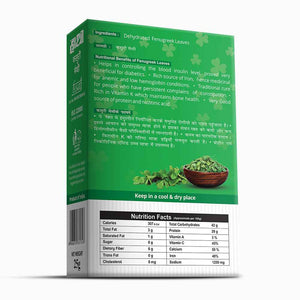
Nutritional Information
Nutrient
Per 100g
% Daily Value
Calories
323 kcal
n/a
Protein
23.0 g
n/a
Total Fat
6.4 g
n/a
Saturated Fat
1.5 g
n/a
Carbohydrates
58.0 g
n/a
Dietary Fibre
25.0 g
n/a
Cholesterol
0 g
n/a
Trans Fat
0 g
n/a
Sodium
67 mg
n/a
Vitamin A
3.0 mg
33%
Vitamin C
2.8 mg
3%
Iron
33.5 mg
186%
Calcium
176 mg
18%
Potassium
Good amount
n/a
Magnesium
Good amount
n/a
Nutritional values are indicative. Exact values may vary by batch.
Health benefits of using kasuri methi
-
A small amount adds rich flavour without adding fat or oil to your dish.
-
These dried methi leaves naturally contain high iron. This mineral is important for energy.
-
Each spoonful of this leaves contains a good amount of calcium, which is essential for bone health.
-
Kasoori methi is high in dietary fiber, which helps to digest heavy meals.
-
It has been used as a natural home remedy in many Indian households for ages.
Storage: Once you open the Hathi Masala’s sealed pack, transfer the dried methi leaves to an airtight container. Store the same container in a cool, dry place away from moisture, heat, and direct sunlight. Always use a dry spoon, as moisture can ruin its smell. Use it within 12-14 months of opening to get better aroma and taste.
Quality You Can Trust
Hathi Masala has been making spices since 1952. They get their kasuri methi from farms in Gujarat. Hathi Masala carefully. Dry the fenugreek leaves to keep their nice smell. They test each batch of leaves to make sure they are safe and pure before sending them out. They do not add anything or preservatives. You can buy Hathi Masala kasuri methi in 100g and 500g packs.
-
Every batch is lab-tested
-
No human contact, hygienically packed
-
Hand-picked and dried carefully
-
Packed in 3-layer packaging
Buy hathi kasuri methi online. It’s available in 100g and 500g packs to suit your daily and bulk needs.
More from the Hathi Masala Kitchen
Explore related collections:
-
Everyday Masala, Turmeric, coriander, cumin & more for daily cooking
-
Turmeric Powder, Selam, Rajapuri, and Super Turmeric
-
Whole Masala, Whole spices for tadka and traditional cooking
FAQ About Kasuri Methi
Q1: What is kasuri methi used for in Indian cooking?
It adds a warm, earthy smell to the dishes. It can be used in daily dal makhani, paneer butter masala, butter chicken, vegetable gravies, naan dough, and parathas. Always add it at the end of cooking so its fragrance stays fresh and strong.
Q2: How much kasuri methi should I use in one dish?
Half to one teaspoon works well for 4-5 servings. Keep a habit to crush it roughly between your palms before adding. This step releases the natural oils, giving a sharper aroma. Hathi kasuri methi is carefully dried to preserve its aroma.
Q3: Are kasuri methi and kasoori methi the same thing?
Yes. Both of these are 2 different names of the same ingredient. Both are names of dried fenugreek leaves. You will notice both spellings are used on packages and in recipes across India. They mean the same ingredient.
Q4: What is the difference between kasuri methi and methi seeds?
Kasuri Methi is also known as dried fenugreek leaves. This is used at the end of cooking to add aroma. Methi seeds are small and firm. They’re mainly used in tempering (tadka) at the beginning of cooking to impart a stronger, slightly bitter taste. They come from the same plant but are used very differently.
Q5: Should I add kasuri methi during cooking or at the end?
You should add these dried leaves at the end of cooking. Add them in the last 1-2 minutes before turning off the gas. Crush them roughly between your palms before adding. This opens the leaves and releases the natural oils inside.
Q6: How should I store Kasuri Methi at home?
Transfer the dried fenugreek leaves to an airtight glass or steel container after opening. Keep the container in a cool, dry place away from moisture and direct sunlight. Always use a dry spoon. Use it within 8-12 months of opening.
Q7: Does hathi kasuri methi contain artificial colour?
No. Hathi masala spices are free from artificial additives, colours, or preservatives. The deep, rich green colour of hathi kasuri methi comes entirely from the carefully dried fenugreek leaves themselves.
Q8: Can I use this kasuri methi in non-Indian dishes?
Yes. It pairs well with non-Indian cuisine also. A small amount adds a warm aroma and a little earthy taste notes to any creamy pasta sauces, breads, soups, or even scrambled eggs. Crush the leaves roughly right before adding them to the dish.
Q9: Is kasuri methi good for the human body?
Yes. It contains many natural minerals, including iron, calcium, and fiber. In traditional Indian Ayurveda, it’s used to boost digestion and improve gut health. This ingredient is also used in everyday Indian food. Check with your doctor first for any particular health conditions.
-
-
Recipes
-
History & Source
-
Ingredients
-
FAQ