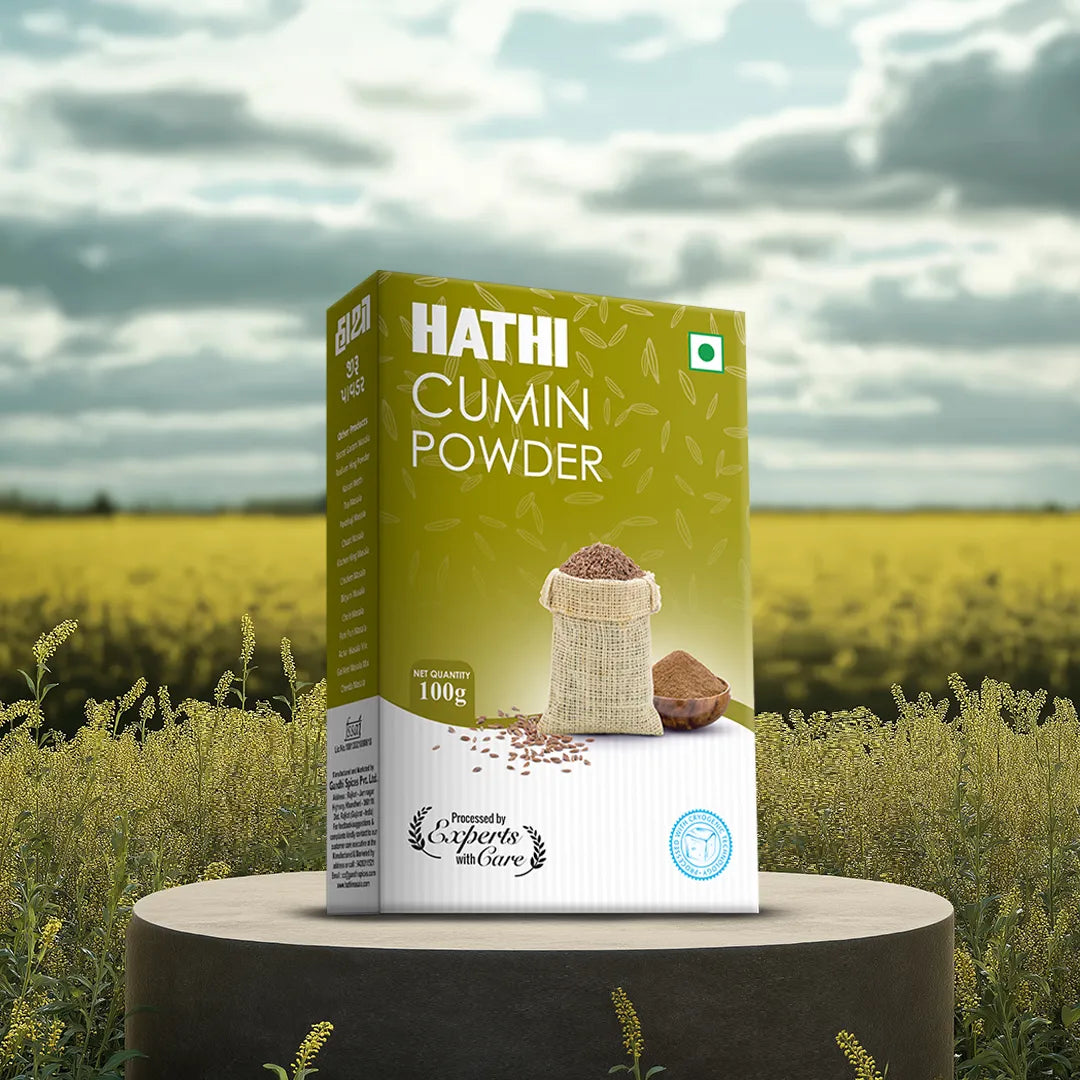
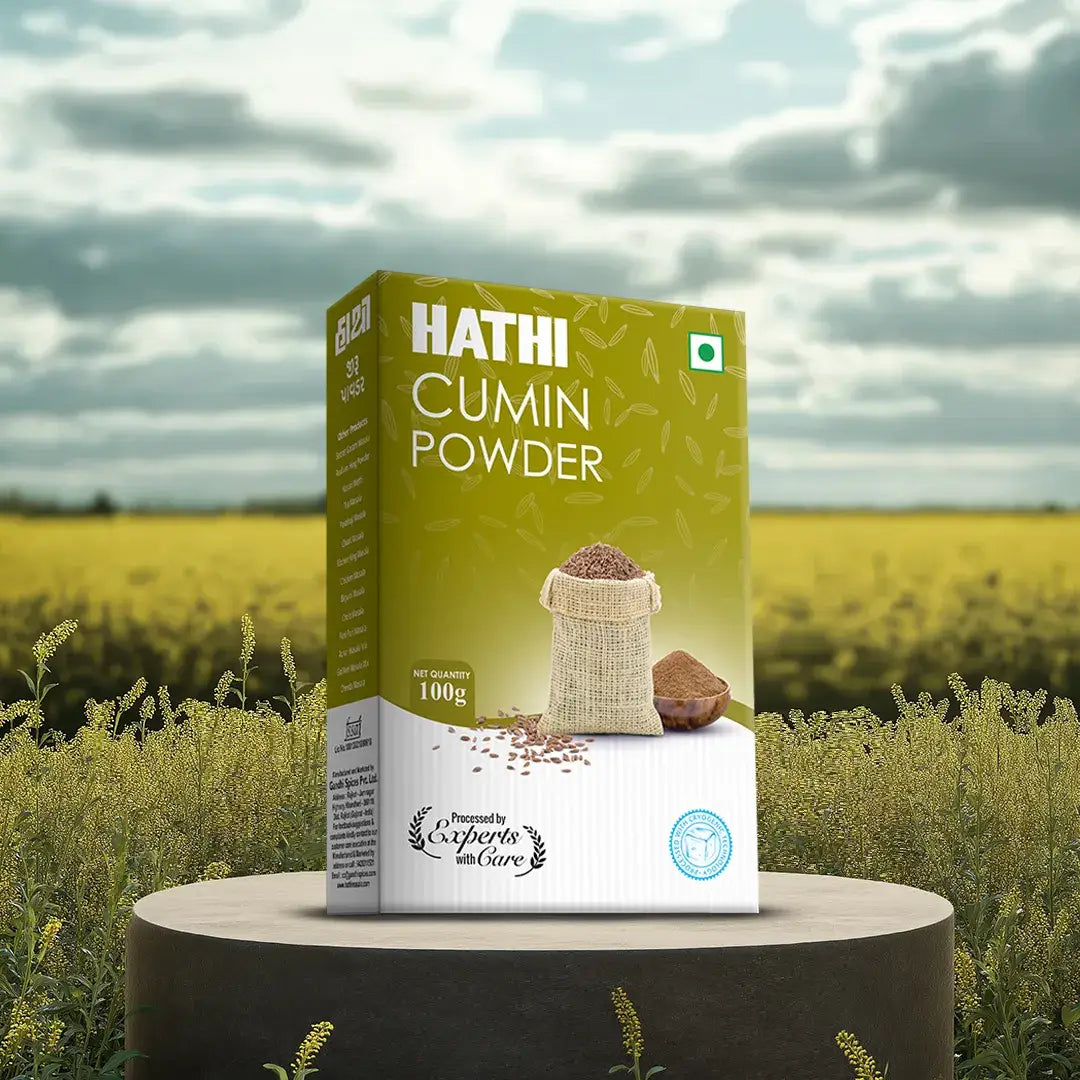
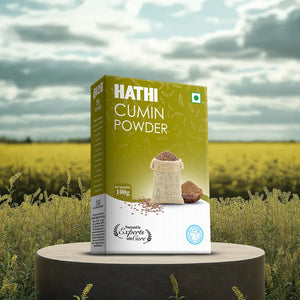
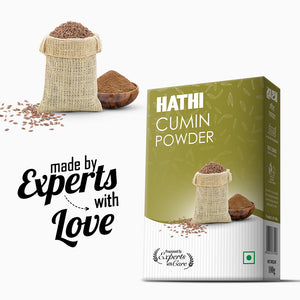
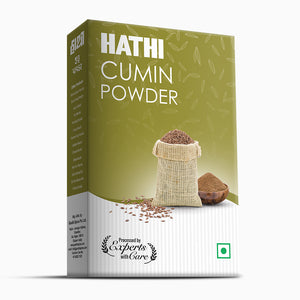
Hathi Masala Cumin Powder
hathi cumin powder, cumin powder, best cumin powder
Hathi Masala Cumin Powder
hathi cumin powder, cumin powder, best cumin powder

Cumin Powder (Jeera Powder)

sold in last hours
Sale price ₹ 62
Inclusive Of all Taxes.

Guarantee Safe Checkout

Weight: 100g
Cumin is normally referred in India as the ‘delightful spice’. Bitter flavour and cooling properties of Hathi Cumin Powder enriches the aroma and taste of your well-cooked dishes as well as keeps you fit. Generally used in Indian, Mexican, North African, Middle Eastern, and Chinese cuisines.

Bulk Inquiry

Manufactured & Marketed By: Gandhi Spices Pvt.Ltd.

Rajkot-Jamnagar Highway, Khandheri, Rajkot, Gujarat - 360006

Country of origin India

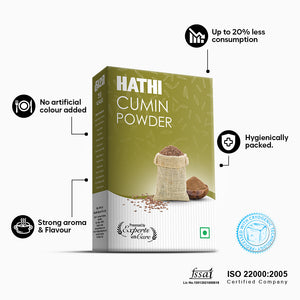
No artificial colour added.

Microbiologically tested.

Scientifically graded.

Hygienically packed.

Hathi Masala Cumin Powder

Cumin Powder (Jeera Powder)

  • Description

    Cumin Powder (Jeera Powder)

    Hathi Masala Cumin Powder is cryogenically ground from the whole jeera sourced straight from reliable farmers in Gujarat. It’s one of India's largest cumin-growing regions. Hathi Masala grounds whole Jeera Seeds cryogenically at very low temperatures to lock in the earthy fragrance you notice immediately when you open a fresh pack. No artificial additive. Just pure jeera powder that works well in dal tadka, sabji, and raita every day. Available in 100g and 500g.

    What Makes Hathi Masala Cumin Powder Reliable?

    - Cold grinding

    - Lab Tested for 20+ Parameters

    - Sourced from Gujarat

    - Hygienically packed

    - No Artificial Additives or dyes

    - FSSAI and ISO 22000 certified

    What Is Cumin Powder?

    Cumin powder, also known as jeera powder, is used in most Gujarati and Indian kitchens. It’s made by grinding dried whole cumin seeds. Cuminaldehyde is the active compound present in jeera. It’s a volatile essential oil responsible for its sharp, warm, earthy smell and slightly bitter, nutty flavor.

    The quality of cumin powder depends on where the seeds are sourced from and how they are ground. A while cumin from Gujarat is well-known in the Indian spice market for its high cuminaldehyde content and a uniform aroma that holds well even after cooking at high temperatures. 

    Sourcing and Origin

    Hathi Masala sources whole cumin seeds straight from the farmers in Gujarat and Rajasthan. The Unjha region of Gujarat is one of the largest cumin-producing hubs in India. The dry climate and soil of these regions produce jeera with naturally higher cuminaldehyde levels than cumin sourced from other regions of the country.

    Every batch of whole Jeera seeds is evaluated accordingly. Seeds that are small in size, light, or don’t meet the required moisture and other standards are rejected before processing. 

    Why Cryogenic Grinding Matters for Cumin Powder

    Cuminaldehyde, the essential oil compound that gives jeera powder its sharp aroma, is heat-sensitive. Traditional grinding produces heat from friction, which evaporates the natural essential oil cuminaldehyde and reduces aroma and flavor.

    Hathi Masala is a cryogenic spice brand that grinds the whole seeds at -150°C using liquid nitrogen. At that temperature, the compounds of cuminaldehyde crystallize and are locked inside each particle. When you open the packet, the fragrance is sharp and clean. When the powder hits hot oil or ghee in a tadka, its flavor fully releases. Since the potency is maintained, you automatically end up using less powder, up to 20% less than the normal jeera powder.

    Where to Use Cumin Powder

    Dal Tadka: Add 0.5 teaspoon to pre-heated ghee along with mustard seeds. The compound cuminaldehyde blooms in and gives the dal a deep, roasted jeera flavour evenly.

    Dry Sabzi: Add 0.25-0.5 teaspoon while cooking the onion-tomato gravy. Jeera powder gives the masala gravy and sabzi an earthy, bitter backbone and balances the sweetness of onions and tomatoes.

    Raita and Buttermilk: Add 0.5–1 teaspoon of roasted cumin powder into the fresh curd along with cucumber, salt or black pepper powder. The jeera powder adds a smoky layer to the raita. Add 1 teaspoon to cold buttermilk for a cooling effect.

    Jeera Rice: Add 0.5 teaspoon to the pre-heated ghee or oil before adding the cleaned rice. This gives each rice grain a mild, warm aroma without making it bitter.

    Gujarati Kadhi: Add 0.25 teaspoon to the buttermilk and besan mixture before cooking it. Jeera powder in kadhi adds a grounding, earthy note to the sour and tangy flavors of the kadhi

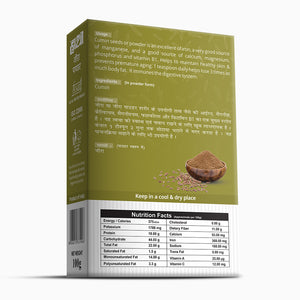
    Nutritional Information

    Nutrient

    Per 100g

    % Daily Value

    Energy

    375 kcal

    -

    Protein

    18g

    -

    Total Fat

    22g

    28%

    Cholestrol 

    0mg

    -

    Carbohydrates

    44g

    16%

    Dietary Fibre

    11g

    39%

    Sugars

    0g

    -

    Sodium

    168mg

    7%

    Iron

    368mg

    -

    Vitamin C

    12mg

    15%

    Vitamin A

    25µg

    2%

    Calcium

    93mg

    8%

    Potassium

    1267mg

    -

    Magnesium 

    330mg

    -

    Linalool

    Naturally present

    -

    Nutritional values are indicative. Exact values may vary by batch.

    Comparison Table: Which Cumin Product Should You Use?


    Hathi Cumin Powder

    Coriander Cumin Powder

    Best For

    Dal tadka, sabji base, raita, rice

    Gujarati sabji, undhiyu, thepla

    Flavour Release

    Immediate

    Milder, balanced

    Convenience

    High, no pre-roasting needed

    High

    Aroma Strength

    Strong (cryogenically preserved)

    Lighter, blended

    When to Use

    When your dish requires a consistent jeera flavour 

    When your dish needs  a balanced coriander-cumin base

    Quality You Can Trust

    Hathi Masala has been part of Indian spice manufacturing since 1952, made by Gandhi Spices Pvt. Ltd. in Rajkot, Gujarat. It processes without any human contact at any stage. Whole Cumin seeds are cleaned using fine-mesh automatic cleaning machines built for tiny spices. It removes stems, chaff, dust, and broken pieces without human contact. The cumin seeds are cryogenically ground at very low temperatures. Lab-tested every batch for purity, fragrance quality, and safety.

    - FSSAI Certified and ISO 22000 Manufacturing

    - Lab Tested Every Batch

    - Cryogenic Ground at -150°C, No Heat Damage

    - Hygienically Packed, Dedicated Sterilization Facility

    - Flavour-Locked 3-Layer Packaging

    Buy Hathi Masala Cumin Powder online. Available in 100g and 500g packs to suit your daily kitchen needs. 

    More from the Hathi Masala Kitchen

    Explore related collections:

    Everyday Masala, Turmeric, coriander, cumin & more for daily cooking

    Turmeric Powder, Selam, Rajapuri, and Super Turmeric

    Pickle Masala, Ready-to-use mixes for homemade achar

    Whole Masala, Whole spices for tadka and traditional cooking

  • Recipes

    Uses of Cumin Powder in Indian Cooking, With Quantities

    Dal Tadka (Tempering for Lentils): Heat 1 tbsp of ghee or oil in a small pan until hot. Add ½ tsp cumin powder and stir for 20–30 seconds until fragrant (do not let it burn; it will turn bitter). Pour over cooked dal immediately. This method creates the smoke-infused, aromatic finish that defines restaurant-quality dal. Quantity per 500g of cooked dal: ½ to 1 tsp cumin powder.

    Jeera Rice (Cumin Rice): Heat 1 tbsp ghee in a thick-bottomed pot. Add ½ tsp cumin powder (along with whole jeera seeds if available) and cook for 30 seconds until the ghee becomes fragrant. Add the washed rice and continue cooking as usual. The cumin-infused ghee coats every grain, creating an even, integrated flavour. Alternatively, sprinkle ¼ tsp over finished steamed rice and mix with butter. Serves 2.

    Cumin Raita: Whisk 200g of cold yoghurt with ¼ tsp cumin powder, ¼ tsp roasted cumin (or extra cumin powder if seeds unavailable), salt, and chopped coriander. The cumin powder should be added before the other spices; it is the base note on which all other flavours build. For best aroma: dry-toast 1 tsp of cumin powder in a dry pan for 30 seconds before adding to raita.

    Jeera Water (Cumin Digestive Drink): Bring 500ml of water to a boil. Add 1 tsp of cumin powder (or whole cumin seeds). Reduce to a simmer for 5 minutes. Strain if using seeds. Allow to cool to warm (not hot). Add a squeeze of lemon juice and a small pinch of black salt (kala namak). Drink on an empty stomach each morning for digestive benefits. Traditionally consumed for 21 consecutive days in Ayurvedic practice.

    Spice Base (Masala Foundation): In most North Indian curries, the spice base is built in the sequence: turmeric → cumin powder → coriander powder → chilli powder → garam masala. Cumin powder goes in second, after the onion-tomato base has cooked down, because it needs the oil and heat to bloom its volatile oils. Ratio: for 500g of meat or 2 cups of legumes, use ½ to 1 tsp cumin powder.

  • History & Source

    Origin: India’s Cumin Heartland: Rajasthan and Gujarat

    India is the world’s largest producer, consumer, and exporter of cumin. It accounts for approximately 65–70% of the global cumin supply. Within India, two states dominate cumin cultivation.

    Rajasthan: The primary cumin-growing state; districts including Barmer, Jalore, Jodhpur, Jaisalmer, and Pali account for the majority of India’s cumin. Rajasthan’s arid climate with cold winters and hot, dry summers creates ideal conditions for cumin’s slow maturation. The sandy loam soil of western Rajasthan produces seeds with high essential oil content.

    Gujarat: The second major cumin belt comprises the districts of Banaskantha, Patan, Mehsana, and Kutch. Gujarati cumin is known for its particularly dark colour and slightly more pungent aroma. The Unjha market in North Gujarat is India’s largest cumin trading hub, setting the benchmark price for cumin across the country.

    Hathi Masala, headquartered in Rajkot, Gujarat, sources premium cumin via its 70-year procurement network across Rajasthan and Gujarat. Each batch is selected for high essential oil content and pure seed integrity, ensuring rich flavor and aroma, with zero adulteration verified by over 20 lab test parameters.

  • Ingredients

    Cumin

  • FAQ

    Frequently Asked Questions: Cumin Powder (Jeera Powder )

    Q1: What is Cumin Powder used for in Indian cooking?

    It’s one of those spices that quietly fits into almost everything we cook. It gives the warm, earthy base note that gives every Indian dish that familiar, soothing smell. You can add it to sabji, dal tadka, curry base, raita, buttermilk, and chaat.

    Q2: How much Jeera Powder should I use per dish?

    0.5 teaspoon for dal or sabji serving 4 people. 0.25 teaspoon for raita. 0.5 teaspoon in pre-heated oil or ghee for jeera rice. Since Hathi Masala preserves and locks in its full aroma and taste through cold cryogenic grinding, you actually need a smaller amount than regular jeera powder to get the same flavor.

    Q3: What is the difference between Whole Jeera Seeds and Jeera Powder?

    Jeera powder mixes evenly into your dishes, so every bite tastes the same. Whole jeera is used for tadka and popping in pre-heated ghee or oil in dishes like jeera rice or biryani, where you want that burst of smoky flavor. For daily dal and sabji, jeera powder is a little more practical and consistent.

    Q4: What is the difference between Jeera Powder and Dhana Jeera Powder?

    Jeera Powder is only ground cumin seeds, nothing else blended in. Dhana Jeera Powder (Coriander Cumin Powder) is a mixture of coriander and cumin powder in a fixed ratio.

    When to use which:

    • Use Jeera Powder when your dish needs only Jeera taste separately, or when you want a customized ratio of each spice, go with the separate one.
    • Use Dhana Jeera Powder as a two-spice blend for an easy, ready-to-use mixture in your regular bulk cooking.

    Q5: Why is Hathi's Jeera Powder better than regular Jeera Powder?

    Traditional grinding generates heat that evaporates the natural essential oils. Hathi Masala uses cryogenic technology that grinds at -150°C, preserving all those oils. That is why you smell that fresh jeera the moment you open the packet and why your tadka smells so much better with it.

    Q6: How can I check if my Jeera Powder has gone bad?

    The easiest method to check is just to open the pack or box and smell it. A fresh, high-quality jeera powder should have a pungent, layered aroma. You may smell the light smoky note of Dhaniya. If it smells dull or flat, the natural essential oils have dried out, and it has lost its strength.  

    Q7: Does Hathi Masala Jeera Powder contain any artificial flavor or color?

    Not at all. The light brown color of Jeera powder comes completely from the essential oils in the seeds. There are no artificial additives, dyes, or preservatives. Every batch of Hathi Masala Cumin Powder is lab-tested for purity and safety before dispatch.

    Q8: How should I store Jeera Powder to keep it fresh?

    Store Hathi Masala Jeera Powder in an airtight steel or glass jar. Keep it away from direct sunlight and moisture. Always use a dry spoon when removing it. During the humid monsoon months, when the air is very humid, keep the spice in a closed cabinet rather than on a shelf near a window. Because these cumin seeds contain more natural oil, they’re a little more sensitive to heat and moisture.

    Q9: How long does Hathi Jeera Powder stay fresh after opening?

    Hathi Masala Jeera Powder has a shelf life of 2 years when stored in a cool, dry place. After opening, the powder retains its best flavor for 6-8 months when stored correctly. Store in a cool, dark place in an airtight container. Always use dry spoons. Hathi Masala's 3-layer packaging locks in freshness and fragrance.

    Q10: Can I use Cumin Powder in Buttermilk?

    Yes. A pinch of jeera powder in buttermilk is a classic across households in Gujarat and Rajasthan. For a richer, smokier flavor, dry-roast the powder in a pan over low heat for 30 seconds before adding it to the buttermilk.